Home » Posts tagged 'Christ in the Psalms' (Page 3)
Tag Archives: Christ in the Psalms
Penitential Psalms: Psalm 51–A Personal God of Love

It happens to be Maundy Thursday and tomorrow is Good Friday. Psalm 51 is an Easter Song if there ever was one. Psalm 51 is difficult for me and for everyone who strongly feels that Christ is the primary speaker in David’s psalms. The speaker in this psalm unquestionably confesses his personal guilt and sin. And Christ is sinless and holy. How can the speaker be Christ? And yet, that is my position.
Craig C. Broyles writes that of the seven penitential psalms (Pss. 6, 32, 38, 51, 102, 130, and 143), Psalm 51 is unique in its exclusive focus on sin (Broyles, p226). He also writes that among the psalms as a whole, it is “unrivaled … for its interest in inner transformation” (Ibid.). While Broyles in no way claims Christ as speaker, he states that within the psalm itself there is no reason to see David as speaker (Ibid., p 226-227). The superscripts were written by an ancient editor after the fact. None of the superscriptions above the psalms is to be considered Scripture.
Why is it so difficult to receive Christ as speaker in Psalm 51? Consider these words:
Have mercy on me, O God, according to your steadfast love; according to your abundant mercy blot out my transgressions. 2 Wash me thoroughly from my iniquity, and cleanse me from my sin! 3 For I know my transgressions, and my sin is ever before me. 4 Against you, you only, have I sinned and done what is evil in your sight, so that you may be justified in your words and blameless in your judgment. 5 Behold, I was brought forth in iniquity, and in sin did my mother conceive me. (Psalm 51:1 ESV)
Turn away thy face from my sins, and blot out all mine iniquities. (Psalm 51:9 LXE)
I must speak personally here, but I think I speak for many. To attribute the above words to Christ stirs up uncomfortable feelings of shame that are difficult to deal with. If Christ the sacrificial lamb speaks these words upon the painful cross, then that means that he the sinless one is speaking these words for me. It’s extremely humbling to go before the throne of grace knowing that He knows. It’s humbling to agree with him that yes, I did do these things. But what is most humbling is to see the big problem for God that my sin caused and to watch, childlike, as he himself pays the cost to fix the damage my sinful actions brought about. Yes, it’s very childlike. Come on, folks, admit it. God went to a lot of trouble to fix the problem humanity’s sin caused and it cost him a great deal. Because he is who he is, we in our puniness will never be able to possibly imagine what it was like for God’s Son, God himself, our creator, the all-powerful one, to become one of us and to take upon himself our sin.
Psalm 51 can be a great blessing for everyone whose sin is great. So often we hear about those who feel that God could never forgive their sin because of its excessive nature. “God can forgive others,” they may think, “but he could never forgive me.” Yes, he could! And he did! The actual words of the psalm itself don’t say what the sin was. When Israel’s high priest used to lay his hands upon the head of the scapegoat, he wasn’t just symbolically giving up the low-level sins of the people, but all their sins (Leviticus 16:7-10). God knows. Jesus on the cross knew what the sins were. He confessed them as his own.
What might the following words mean when translated into the actual experience of the One hanging on the cross? 
For our sake he made him to be sin who knew no sin, so that in him we might become the righteousness of God. (2Corinthians 5:21 ESV)
Might such a person, who has himself become sin, be able to confess the words of Psalm 51? For the sake of all who might ever believe in him, I say yes (1).
__________
1 Because Scripture calls for a witness of at least two, “Where two or more are gathered in my name…” “…take one or two others along…,” I’d like to bring along with me John Barclay. He writes:
… there is no blasphemy (as many have most blasphemously alleged there is) in this manner of interpretation [Christ as the sole speaker in all of Psalm 51]; which must either be admitted, or the New Testament made void! (Barclay, page 218)
While Barclay in his preface has multitudes of arguments to support his attributing all of Psalm 51 to Christ as speaker, one of his main arguments is the existence of parallel passages: Psalm 51:16-17 is parallel to Psalm 40:6. Psalm 40:6-8 is quoted in Hebrews 10:5-7. There the words are attributed directly to the mouth of Christ, “Therefore, when Christ came into the world, he said…” (Ibid.). Barclays’s logic is mathematical: If A = B and C = B, then A = C. Since the New Testament in Hebrews attributes Psalm 40:6 to Christ as speaker, then a parallel passage in another psalm (Psalm 51:16) must also be attributed to Christ (Barclay, page 47). It also follows that since there is one speaker throughout all of Psalm 51, if one portion is spoken by Christ, then the whole psalm, by the rules of plain English, must also be spoken by Christ (Ibid., page 42-43).
While I agree with this “head” explanation, I also fully agree with Barclay elsewhere, when he states that seeing Christ as our intercessor and mediator in Psalm 51 is mostly a matter of heart. Christ fully and consciously washed our sins away in his own blood. Why would anyone want to maintain that Christ our mediator did not stand in for us and acknowledge our sin as his own? If this were not so, Barclay asks, then how can we have confidence that the righteousness of Christ is ours? In other words, “How could sinners call his righteousness theirs, if he had not called their sin his?” (Ibid., page 71). And if our theology permits Christ to call our sin his, then in honesty, we cannot forbid him from confessing it. Yes, to see Christ as the speaker of Psalm 51 is to see what substitutionary atonement meant for the Lamb of God.
Many blessings upon you all; may this Easter be among the happiest you have ever known.
Penitential Psalms: Psalm 38–Christ’s Passion Speaks Loudly

Link to Psalm 38(37) English Septuagint Translation
Psalm 38 screams at the reader and begs her to ask, “Why is such a self-declared righteous man being punished so extremely by God? What were his self-declared sins against God, that he receives such wrath?” And finally, “Doesn’t it seem odd that someone who knows he is being oppressed by God for his sins would so mightily press upon God in prayerful request for salvation from his enemies?”
Psalm 38 is nowhere quoted in the New Testament, yet it bears a striking resemblance to Psalm 22, which is one of the Old Testament passages most often quoted in the New (1). The Gospel quotations of Psalm 22 make explicit reference to Christ in his Passion, while the author of Hebrews sees Christ as speaker within the context of Psalm 22:22. If readers perceive Christ as speaker in Psalm 22, wouldn’t the same principles of interpretation allow them to perceive Christ as speaker in Psalm 38? The answer is yes.
 Augustine in the 4th century perceived Christ as the speaker of Psalm 22 in its entirety from first to last (3). Making an appeal to consistency, he argues that if Psalm 38:3 is not spoken by Christ, then neither is Psalm 22:1, whose words in verse 1a Christ spoke from the cross, “O God, my God, attend to me: why hast thou forsaken me?” Augustine equates, “The words of mine offences are far from my health,” (Psalm 22:1b, Septuagint) with, “There is no peace to my bones because of my sins,” (Psalm 38:3b, Septuagint). Augustine answers questions 1 and 2 above by his claim that as Christ is the head of the body, when he speaks, he speaks for both himself as head and for the body. The sins he confesses are the sins of the body–i.e., the sins of humankind. God metes out on the cross the just consequences of sin that fell upon Adam when he first sinned in the garden. There God said to Adam, “You shall surely die,” (Genesis 2:16-17).
While many other commentators have many other opinions of who is speaking in Psalm 38, I will jump forward to John Barclay (1795-1826, Scotland), with whom I share a kindred spirit. He writes,
This Psalm also is all spoken in one person, and breathes forth the heaviest pressure and anguish of spirit, supported by the most consummate meekness, patience, and resignation to the will of God: the language is borrowed from the most pungent feelings of one suffering all manner of distress in body, min, character, and estate. That Messiah is the person, is demonstrable from the very face of the whole Psalm, compared with all its parallels cited on the margin with others [Note: The ESV version has many links to Psalm 38 throughout the Old and New Testaments], and read in the light of the four Evangelists: so that nothing more particular needs be said in this place; only the reader may especially consult Psalms vi. xl. lxix. and lxxxviii. with their illustrations (Barclay, pages 186-187).
Robert Hawker (1753-1827) writes upon Psalm 38:1,
And how truly interesting is it to behold Christ with an eye of faith thus praying; and to hear him with the ear of faith thus pleading; when enduring that curse which the law denounced against the sinner, and thus redeeming us from the curse by becoming both sin and a curse for us, that we might be made the righteousness of God in him. Gal. iii. 13. 2 Cor. v. 21. (Hawker, page 284)
And again, concerning verses 2-10:
Let any man read these verses, and then turn to the gospel, and his mind must be led out to remark the striking similarity between what is here said by the spirit of prophecy, and the history of the sorrows and sufferings of Jesus. Reader, turn to some few passages, and then pause over both, in comparing spiritual things with spiritual, and say whether David spake these things of himself, or of some other man? Luke, xxii. 41-44; Mark, xiv. 32-34: (Ibid.)
Concerning verses 11-14:
Who that ever read the prophet’s account of Him, that as a sheep before her shearers was dumb, so he opened not his mouth; or who that ever read the relation of Jesus standing before Pilate, when, amidst all the blasphemy poured upon him, he remained silent, until the unjust judge himself marveled; or who that ever attended to what the apostle hath said of Jesus, that when he was reviled, he reviled not again; who, I say, that ever attended to these things, could hesitate for a moment to behold the Lord Christ in this prophetic description of him? Surely no one that knows any thing of David’s history, will give him credit for this dumbness and insensibility to the reproaches of his enemies. (Ibid.)
For those who may feel uncomfortable attributing the confession of sin to the lips of Christ, Hawker writes this of verse 18:
Let not these words stagger the faith of the believer in considering them as spoken by Christ. As the sinner’s Surety, he was truly made sin for his people, so the scripture declares, yea, also a curse for them. Hence, in the eye of the law, Christ and his seed are one. Gal. iii. 13. 2 Cor. v. 21. (Ibid.)
Samuel Horsley (1733-1806) is bold in proclaiming,
Many parts of the psalm, however, have so striking a reference to the case of our Lord in the days of his flesh, that I cannot but think the whole belongs to him, and that he (the humanity of Christ) is the sick persecuted suppliant. If the sickness may typify generally his humiliation, as I think it may, and the heat which rages in the sick man’s loins, the fiery trial of wrath which he endured in the garden of Gethsemane, when his distress, though principally mental, discovered itself in dreadful symptoms in his body; if this interpretation of the sickness be admitted, there is not a sentence nor a word in the whole of this extraordinary composition which is not applicable to our Lord as man, with more strictness and propriety than to any other person. (Bishop Horsley, page 95, published posthumously in 1815 by the author’s son.)
Again, Andrew A. Bonar (1810-1892) addresses the incongruity of confessed sin by one whom Scripture declares righteous, when he writes:
The difficulty in the way of supposing it used by the Lord Jesus, as descriptive of his feelings and state, when he took on our guilt by imputation, is not at all greater than in some passages of Psalms xl. and lxix., which almost no one doubts to be his utterances. (Bonar, 129)
Finally, the editors of The Orthodox Study Bible (2008) write that Psalm 38 (37 LXX),
“reveals the great love of Christ for mankind in His sufferings and death on the cross, especially v. 18: For I am ready for wounds, and my pain is continually with me. And although He was ‘separate from sinners’ (Heb 7:26) and ‘knew no sin’ (2Co 5:21), yet out of His great compassion for sinners, He prays this prayer in a relative sense as though He were one of them. Thus, He takes the place of sinners as one of them, and intercedes to the Father for their salvation in the midst of His sufferings and death on the cross.”
The fact that I’ve included so few current references to the voice of Christ praying Psalm 38 is a sad reflection on the distance today’s evangelical churches and biblical academicians generally have moved away from the centrality of hearing Christ pray the Psalter. The third question stated in the opening paragraph above is, “Doesn’t it seem odd that someone who knows he is being oppressed by God for his sins wo0uld so mightily press upon God in prayerful request for salvation rom his enemies?” The answer is simple once we identify the speaker as Christ who prays this prayer. We are not at all surprised to hear the substitutionary Lamb of God asking his Father that his enemies not triumph over him.
What about the Penitential Nature of Psalm 38?
Psalm 38 is third in the series of seven traditional penitential psalms (4). The first verses of Psalms 38 and 6 are identical in the Septuagint (Greek). Even though the speaker in Psalm 38 attributes his suffering to his sin, he does not repent in the strict form of asking for forgiveness (5). Bruce Waltke, James Houston, and Erika Moore write:
Psalm 38 is truly a great piece of literature. The psalmist enables his reader to feel his eventual numbness from his unremitting pain by his unrelenting verbal depictions of them. No psalm depicts sickness in such an extended, numbing way. As the psalmist can endure no further suffering, neither can his audience endure further reading about them. (Waltke, page 134)
Psalm 38 is complex, however, because in the center of this prayer to God the psalmist shifts his focus from describing his pain to describing his enemies. The psalmist’s concern over his enemies continues nearly to the end of the poem. While Craig C. Broyles writes that the actions of his enemies, like those of his friends, are a reaction to his sickness (Broyles, 186), verse 20 (LXE) states otherwise, “They that reward evil for good slandered me; because I followed righteousness.” As indicated in the opening paragraph above, the self-proclaimed righteousness and goodness of the psalmist adds further complexity to this “penitential” psalm.
For those who explore the Septuagint, verse 17(18 LXX) provides an eye-catching difference from the Masoretic text within the context of the New Testament narrative:
Mark 15:15: and having scourged Jesus, he delivered him to be crucified. (ESV)
Septuagint (Greek): Because I am ready for scourges, and my pain is ever with me. (NETS, Albert Pietersma, ed.)
Septuagint: For I am ready for plagues (footnote in text: scourges), and my grief is continually before me. (Brenton)
Septuagint: For I am ready for wounds, And my pain is continually with me. (Original translation of St. Athanasius Academy in The Orthodox Study Bible.)
Masoretic (Hebrew): For I am about to stumble, and I am in constant pain. (NET)
Greek for “scourges”: μάστιγας
Definition: μάστιξ, μαστιχος, ἡ, a whip, scourge ) [Hebrew שזט Strong’s 07752] 1 Kings 12:11,14; Prov. 26:3): Acts 22:21; Heb. 11:36; metaphorically, a scourge, plague, i. e. a calamity, misfortune, especially as sent by God to discipline or punish (Ps. 88:33 (Ps. 89:33) (Thayer, Lexicon)
When placed in the context of the entire psalm, verse 17 (18 LXX) adds an important detail to the Passion of Christ.
Summary
Psalm 38 is much more than a “penitential” psalm. In it, we as readers find a strikingly complete first person narrative of the Passion of Jesus Christ. As the surrogate for the human race, Christ confessed the sins of his people, even while maintaining his own righteousness. We see his physical sufferings, his friends and family standing passive and aloof, the attacks of his enemies, and his utter reliance and trust toward God his Father.
As we the readers immerse ourselves in this psalm, we come to experience with the psalmist the great, great love which the triune God bears for his children–us. God is a personal God in an extreme sense of that word. He himself, by becoming one of us and dying a sacrificial death on the cross for us, bears the full weight of the burden each one of us owns. “See what sort of love the Father has given to us: that we should be called God’s children– and indeed we are!” (1John 3:1 NET)
A Personal Plea
If anyone who is reading this has not in your whole life turned to God and said something like, “Hi. Here I am, and this is who I am. Would you be my friend?” then I ask you, won’t you stop reading and thinking right now, turn to God, introduce yourself to him, and ask him for his presence with you? He’ll do all the rest. Jesus Christ will be the best friend you will ever have in your whole life.
__________
1 Psalm 32:1-2 is quoted in Romans 4:7-8, Psalm 22:1 is quoted Matthew 27:46 and Mark 15:34; Psalm 22:18 in John 19:24, Matthew 27:35, Mark 15:24, and Luke 23:24; and Psalm 22:22 in Hebrews 2:12.
2 Compare Psalm 32:3 (LXE) and Psalm 38:13-14 (LXE); Psalm 32:4 (LXE): “For day and night thy hand was heavy upon me: I became thoroughly miserable while a thorn was fastened in me. Pause.” and Psalm 38:2 (LXE): “For thy weapons are fixed in me, and thou hast pressed thy hand heavily upon me.” In this verse the verbs “fastened” and “fixed” are translations of the same Greek word, ἐμπήγνυμι–to stick in.
3 Augustine, Expositions of the Psalms, page 191.
4 The seven penitential psalms are: 6, 32, 38, 51, 102, 130, and 143.
5 Waltke, Houston, and Moore, The Psalms as Christian Lament: A Historical Commentary, page 133.
Penitential Psalms: Psalm 32–Grace
There is one thing about Psalm 32 (31 LXX) upon which everyone agrees: it is a psalm about grace. The Apostle Paul quotes Psalm 32:1-2 in Romans 4:7-8.
1 Blessed are they whose transgressions are forgiven, and who sins are covered.
2 Blessed is the man to whom the Lord will not impute sin, and in whose mouth there is no guile. (Psalm 32:1-2 LXE, Septuagint in English, Brenton)7 “Blessed are those whose lawless deeds are forgiven, and whose sins are covered;
8 blessed is the man against whom the Lord will not count his sin.” (Rom 4:7-8 ESV)
Paul in Romans pronounces grace–pardon for sin apart from works. He uses the example of Abraham, who received God’s blessing of righteousness on the basis of his faith. Paul extends the promise which God gave Abraham to all believers who follow his example of placing their faith in God. For Paul, placing one’s faith in God means placing faith in the God who raised the Lord Jesus from the dead.
22 That is why his faith was “counted to him as righteousness.”
23 But the words “it was counted to him” were not written for his sake alone,
24 but for ours also. It will be counted to us who believe in him who raised from the dead Jesus our Lord,
25 who was delivered up for our trespasses and raised for our justification. (Rom 4:22-25 ESV)
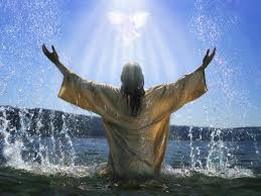
Paul argues in all of Romans 4 that God extends the grace of righteousness to Gentile believers on account of their faith in his Son, rather than on account of their racial birth. And who cannot hear the roar of joy surging like a great wave that encompasses all people around our globe? Besides being penitential, Psalm 32 is well known as a psalm of thanksgiving. The Greek Orthodox Church reads this psalm to new believers as they emerge from the waters of baptism. (See The Orthodox Study Bible.)
Let’s take a look at Psalm 32 (31 LXX).
LXE Psalm 32:1 <<A Psalm of instruction by David.>> Blessed are they whose transgressions are forgiven, and whose sins are covered.
2 Blessed is the man to whom the Lord will not impute sin, and in whose mouth there is no guile.
3 Because I kept silence, my bones waxed old, from my crying all the day.
4 For day and night thy hand was heavy upon me: I became thoroughly miserable while a thorn was fastened in me. Pause.
5 I acknowledged my sin, and hid not mine iniquity: I said, I will confess mine iniquity to the Lord against myself; and thou forgavest the ungodliness of my heart. Pause.
6 Therefore shall every holy one pray to thee in a fit time: only in the deluge of many waters they shall not come nigh to him.
7 Thou art my refuge from the affliction that encompasses me; my joy, to deliver me from them that have compassed me. Pause.
8 I will instruct thee and guide thee in this way wherein thou shalt go: I will fix mine eyes upon thee.
9 Be ye not as horse and mule, which have no understanding; [but thou] must constrain their jaws with bit and curb, lest they should come nigh to thee.
10 Many are the scourges of the sinner: but him that hopes in the Lord mercy shall compass about.
11 Be glad in the Lord, and exult, ye righteous: and glory, all ye that are upright in heart. (Psa 32:1-11 LXE)
A second point of agreement concerning Psalm 32 among commentators is its use of dialogue. After multiple readings, many readers will be able to recognize that more than one person speaks within its lines. Changes of tone, subject, and shifts between singular and plural help delineate the various speech boundaries within the psalm.
Identifying speakers in a psalm can be tricky. The reader must be alert, noticing large and small cues. She must draw upon her knowledge of God and his ways, based upon her reading of all of Scripture. Not surprisingly, while nearly everyone recognizes dialogue and change of speakers in Psalm 32 (31 LXX), there is not consensus concerning who speaks which lines.
Here is how I break it out:
Psalm 32 (31 LXE): A Readers Theater Interpretation
Chorus of the Congregation: … 1 Blessed are they whose transgressions are forgiven, and whose sins are covered.
2 Blessed is the man to whom the Lord will not impute sin, and in whose mouth there is no guile.
Christ to God: 3 Because I kept silence, my bones waxed old, from my crying all the day.
4 For day and night thy hand was heavy upon me: I became thoroughly miserable while a thorn was fastened in me. Pause.
5 I acknowledged my sin, and hid not mine iniquity: I said, I will confess mine iniquity to the Lord against myself; and thou forgavest the ungodliness of my heart. Pause.
Chorus of the Congregation: 6 Therefore shall every holy one pray to thee in a fit time: only in the deluge of many waters they shall not come nigh to him.
Christ to God: 7 Thou art my refuge from the affliction that encompasses me; my joy, to deliver me from them that have compassed me. Pause.
God to his Christ: 8 I will instruct thee [singular in LXX] and guide thee [singular in LXX] in this way wherein thou [singular in LXX] shalt go: I will fix mine eyes upon thee [singular in LXX].
God to the Congregation: 9 Be ye [plural] not as horse and mule, which have no understanding; but thou [added by translator] must constrain their jaws with bit and curb, lest they should come nigh to thee [singular].
[My Interpretation: Be ye [plural] not as horse and mule, which have no understanding. It is necessary to constrain their jaws with bit and curb, or they won’t come near you [singular impersonal required by context of a single person managing the horse.]
Chorus of the Congregation: 10 Many are the scourges of the sinner: but him that hopes in the Lord mercy shall compass about.
11 Be glad in the Lord, and exult, ye righteous: and glory, all ye that are upright in heart.
What makes Psalm 32 a psalm about the substitutionary atonement of Christ?
The key is found in verse 6, “Therefore shall every holy one pray to thee in a fit time…” What is the logic behind this statement, specifically the conclusion, introduced by the word “therefore,” that “every holy one” should pray to God while he may be found? What warrant is there to jump from the example of one sinner (verses 3-5) to an entire group? And what is the warrant to move from the example of a sinner to “every holy one?”
The latter difficulty can be explained by the NET translation. Where the Septuagint uses “every holy one,” (πᾶς ὅσιος), NET translates the Masoretic text as “faithful follower.” I believe that within the context of the Psalter this is a fair translation. Verse six states that “holy ones,” or “faithful followers,” i.e., those who have been forgiven (vs 1), should now call upon the Lord for protection whenever trouble comes upon them as a flood.
But why? Why does the text say, “therefore”? I see two possibilities. In the first, the logic of the psalm may be stating that because one sinner has been forgiven, God will likewise forgive all sinners. A second possibility states that because God has forgiven this particular sinner, therefore, all believing sinners (faithful followers now made holy) will be forgiven and have access to the help of God through prayer.
The answer to the question of which possibility is the correct one depends upon the identity of the speaker of verses 3-5, who also speaks in 7. This speaker would likewise be the singular “man,” a singular male in the Septuagint, referred to in verse 2. Verse 1 is plural; verse 2 is singular. Verse 6 encapsulates these two verses. The many are blessed because of God’s forgiveness to the one. “Therefore…” But who is this one?
First, “Blessed is the man …” of verse two is identical to the opening words of the Psalter in Psalm 1:1 (μακάριος ἀνήρ). The singular male of Psalm 1:1 is considered by this author and by many others to be Christ. Pilate said of him, “Behold, the man…” In that case, Pilate says, “Behold the human being.” Christ was crucified as the head of the human race. (See the prior post, “Penitential Psalms: 32–How Could Christ Pray the Words of a Sinner?”) In the Psalter, however, Christ is not a generic human being, as some translations would have it. He is a particular male, a single person, a real flesh and blood man who prays to God. Psalm 32:1-2 in the Septuagint distinguishes between the many (32:1) and the one male (32:2). This one male is the speaker of verses 3-5, which are closed off with a break, Selah. Verse 6 is the result (“therefore”) of verses 3-5.
Second, verses 3-4 in the Septuagint have some most remarkable words, which if taken literally, provide clues to the identity of the speaker.
3 Because I kept silence, my bones waxed old, from my crying all the day.
4 For day and night thy hand was heavy upon me: I became thoroughly miserable while a thorn was fastened in me. Pause.
Others have pointed out the similarity of these words to those of Psalm 38, which is a veritable portrait of Christ’s crucifixion. The Greek verb (LXX) for “fastened,” Psalm 32:4, “a thorn was fastened in me,” is identical to the Greek verb (LXX) for “fixed” in Psalm 38:2, “For thy weapons are fixed in me, and thou hast pressed thy hand heavily upon me.” Further, Psalm 32:3 states, “Because I kept silence,…” All four gospels make a point of the silence of Christ during his trial.
Once we know that Christ is the speaker of the personal prayer portion of Psalm 32 in verses 3-5 and 7, then the rest of the psalm begins to fall into place. For example, we know that verse 9 cannot be God addressing the speaker of the prayer, because God would never address his Son that way. Verse 8, on the other hand, beautifully illustrates God’s love for his Son.
What turns this psalm from penitential to joyful thanksgiving is the presence of the chorus, made up of believers. Because one man died confessing the sins of others, because God did not impute, or count that sin against him as an individual, then all those for whom Christ died now have free access to God through him. We know that God did not impute sin against Christ (or count it against him, reckon it against him), because God raised him from the dead. If Christ had been guilty, he would have merited his punishment and remained dead. But Christ himself was righteous. We know from his resurrection that God was pleased with him. Because of Christ’s victory, believers are blessed to have their transgressions forgiven, their sins covered. God’s mercy is a cause for thankfulness and rejoicing, which is what the congregation does in the final verse. The psalm opens and closes with God’s mercy for the sinner in view.
Conclusion
Craig C. Broyles writes that Psalm 32 “forms a combination of features unlike any other psalm,” (Broyles, 161). I don’t know about you who are reading this blog, but often, when I first read a psalm, I am left flat, almost without response. I think to myself, “I have nothing to say about this psalm.” But God has blessed me with persistence. God rewarded Jacob with a new name after he wrestled with him all night. Reading the Psalter is often like this biblical story. Many times it is only after wrestling with a psalm, seeking to understand, asking God, delving into the details, reading again and again, that I come to a deeper appreciation of the wisdom of God in how he connects Scripture with Scripture. It is true that these are ancient words and that we as today’s readers must seek to translate them into our own experience. But the treasure of meeting with God through the words of a psalm is so worth the effort. I pray that you will be encouraged to do some digging of your own.
Penitential Psalms: Psalm 32–How Could Christ Pray the Words of a Sinner?

Distant Shores Media/ Sweet Publishing
All our Christian lives, we are told that Christ died for our sins and that he himself knew no sin. We know that his own disciples did not spot references to his crucifixion and resurrection in their own Scripture (Luke 24). Nearly every Easter we hear Psalm 22, “My God, my God, why have you forsaken me?” And yet, when we read the words of confession in Psalm 32:5: I acknowledged my sin to you, and I did not cover my iniquity; I said, “I will confess my transgressions to the LORD,” and you forgave the iniquity of my sin (ESV), we balk at applying these words to the innocent Christ, and we become uncomfortable.
During the time I have studied the Psalter, more and more I become aware that the incarnated Christ is indeed human, a person, a man. The Psalter presents Christ’s humanity in a way that is “down to earth” relatable. Our shared human perceptions of experience were his shared human perceptions also. What hurts us hurt him.
Hebrews 12:2 teaches the shame of the cross–if I were hanging on a cross, I would find it extraordinarily shameful. I can relate to that. Galatians 3:13 tells us that Christ became a curse for us. Deuteronomy 21:23 explains that everyone hung to death upon a tree is cursed of God and a source of defilement for the land. Paul tells us that Christ has been sacrificed as our Passover lamb (1 Corinthians 5:7). John says, “He [Christ] is the propitiation for our sins, and not for ours only but also for the sins of the whole world,” (1 John 2:2 ESV). For “propitiation” in the Old Testament to happen, a lamb was slain and its blood sprinkled on the ark’s mercy seat, so that God’s anger against sinful believers would end. We also read about the scapegoat, upon which the priest would symbolically place “all the iniquities of the people of Israel, and all their transgressions, all their sins,” and “send him … into the wilderness” (Leviticus 16:21 ESV). Christ was also our scapegoat. Isaiah writes, “Surely he has borne our griefs and carried our sorrows; yet we esteemed him stricken, smitten by God, and afflicted,” (Isaiah 53:4 ESV).
Scripture shows us holy people of God who interceded in prayer as though they themselves were the sinful ones. Daniel prayed, “While I was speaking and praying, confessing my sin and the sin of my people Israel, … ” (Daniel 9:20 ESV). The godly Nehemiah prayed, ” … I now pray before you day and night for the people of Israel your servants, confessing the sins of the people of Israel, which we have sinned against you. Even I and my father’s house have sinned,” (Nehemiah 1:6 ESV). Paul in the New Testament wrote strongly, “For I could wish that I myself were accursed and cut off from Christ for the sake of my brothers, my kinsmen according to the flesh,” (Romans 9:3 ESV). So I ask, where in Scripture, if not in the first person voice of the psalmist, would God teach us how thoroughly Christ identified with and became humanity to the point of interceding for us as though one of our very own? 
I believe we should receive Christ’s penitent prayer as our representative in Psalm 32 for the same reason that John the Baptist allowed himself to be persuaded to baptize Jesus, because “it is right for us to fulfill all righteousness,” (Matthew 3:14 NET). I believe many have difficulty receiving Christ’s words of confession in Psalm 32 because of the difficulty we all experience in realizing just how very much one of us Christ became. Adam’s sin brought all his progeny into death and separation from God. One person, Adam, represented everyone. In the same way, Christ represents everyone (1 Corinthians 15:21-22). As our representative, Jesus personally confessed and was punished for each one of us.
As we meditate on these things, may the Holy Spirit open to our hearts this greatest of all loves with which our Creator Father loves us. May the words of John 3:16 take on a deeper texture of meaning as we consider the shame of the holy Son of God confessing our sin as though it were his own. And yet, “he endured the cross, despising the shame,” (Hebrews 12:2) because “… he who makes holy and those being made holy all have the same origin,” (Hebrews 2:11 NET). Jesus is not ashamed to call us brothers and sisters. I can only say, “Hallelujia! Thank you, Lord.” And that is just what the psalmist goes on to say in Psalm 32. We will look at that next time.
Penitential Psalms: Psalm 8–Closing the Overture

Psalm 8 is in no way penitential. It is included here in this packet of penitential psalms because it is part of an unbreakable chain that stretches from psalm 6, which is considered penitential. In Psalms 6 the reader finds the intense struggle that is the Passion of the King, in Psalm 7 the tide begins to turn and hints of victory glimmer, and in Psalm 8, the victory celebration breaks out in peals of joyous song.
If the entire Psalter were a musical production or dramatic presentation, Psalms 1 through 8 would be the introduction, or overture, of the Psalter as a whole.
Psalms 1 and 2 are the overture proper. They introduce the theme of good versus evil, the main characters, and the final outcome. Psalms 3 and 4 present the protagonist and his antagonists in greater detail. Psalms 5 and 6 display the seriousness of the struggle. The audience sees the weakness of the protagonist and the very real dangers of death that confront him. In Psalm 7 the protagonist successfully fights back and hints of the final resolution are given, though not the climax itself. Psalm 8 bursts through as a celebratory resolution, though details of the climax are omitted.
Superimposing the Gospel narrative on top of this dramatic sequence, as a transparency or see-through photographic layer, early Christians could perceive the following:
- Psalm 1–the theme of God’s choosing goodness and destroying evil
- Psalm 2–the main characters: God, his Son the King, and the antagonistic rulers of the earth; the sovereign victory of God and his Son over the rebels; the opportunity of repentance God offers his enemies
- Psalms 3 and 4–the presence of the Son/King as a man on earth; his faith and confidence in the help and victory of God against his enemies
- Psalm 5–an earnest prayer by the Son for help from God and his faith that God will help him triumph over his enemies
- Psalm 6–a hard look at the weakness of the Son as his enemies, and perhaps God himself (how can this be?), attack him so fiercely that death draws near; his earnest prayer to God for help; an assurance that God heard and will turn back his enemies.
- Psalm 7–the Son/King faces and considers the issue squarely, “Have I sinned against my enemies or not?” That is, “Are my enemies justified in their persecution of me?” The answer is that the Son is innocent, and consequently, God will fight for him by turning the wickedness of the wicked against themselves, so that their own evil deeds fall upon their own heads.
- Psalm 8–a joyful song of praise to the victorious God of creation wonders whose original intention for creation is fulfilled
While the first eight psalms give a great introduction to the Gospel narrative as a whole, they do not give away spoilers of the details of the death and resurrection of the Son. These are all but spelled out as the Psalter progresses.
Details of Psalm 8
First, the celebratory and victorious nature of Psalm 8 can be appreciated without resolving the question, “Who is the speaker?” Is the speaker the singular Son/King addressing God? Is the speaker a chorus of righteous people addressing God about his Son? Could the speaker be a chorus addressing the Son? Could the speaker be a single person addressing God about the Son? Could there be a mixture of these possibilities? These are valid questions. But even if the context and words themselves cannot definitively provide answers, the reader can share in the joyful knowledge that God wins in the end and all is right with the world. For audiences situated in the historical time frame when the psalms were read or performed aloud in liturgical settings, the answer to the question, “Who is speaking?” may have been obvious through the use of costumes, face masks, or simply the physical presence and audible voices of the performer(s) themselves.
Secondly, this psalm enjoys extensive quotation in the New Testament.
In the following quotation, Jesus responds to the praise of the children for himself as “Son of David” with a quotation from Psalm 8:2 (Septuagint). The manner in which he uses the quotation implies that the “you” and “yourself” of the psalm make reference to him. That is, Jesus places himself as the subject of Psalm 8, either directly so, or as his being identifiable with God.
From the mouths of children and nursing babies you have ordained praise on account of your adversaries, so that you might put an end to the vindictive enemy. (Psalm 8:2 NET)
15 But when the chief priests and the experts in the law saw the wonderful things he did and heard the children crying out in the temple courts, “Hosanna to the Son of David,” they became indignant 16 and said to him, “Do you hear what they are saying?” Jesus said to them, “Yes. Have you never read, ‘Out of the mouths of children and nursing infants you have prepared praise for yourself’?” (Matthew 21:15-16 NET)
The New Testament quotes Psalm 8:6 in two locations. In both, the writers interpret the words of the psalm as referring directly to Christ, who is the Son/King of Psalm 2.
What is man, that thou art mindful of him? or the son of man, that thou visitest him? 5 Thou madest him a little less than angels, thou hast crowned him with glory and honour; 6 and thou hast set him over the works of thy hands: thou hast put all things under his feet: (Psalm 8:4-6 LXE)
It has been testified somewhere, “What is man, that you are mindful of him, or the son of man, that you care for him? 7 You made him for a little while lower than the angels; you have crowned him with glory and honor, 8 putting everything in subjection under his feet.” Now in putting everything in subjection to him, he left nothing outside his control. At present, we do not yet see everything in subjection to him. (Hebrews 2:6-8 ESV)
For “God has put all things in subjection under his feet.” But when it says, “all things are put in subjection,” it is plain that he is excepted who put all things in subjection under him. (1Corinthians 15:27 ESV)
What About the “Penitential” Psalm 6?
In the context provided for Psalm 6, as detailed above in this blog and in the past several blogs, does this psalm stand out as being noteworthy for a theme of confession, sorrow, and repentance for sin? Is it singularly “penitential” in nature? This author thinks not. Taken as a whole, certain psalms excepted, such as Psalm 51, the first person speaker of the Psalter is shown again and again to be righteously innocent. And yet, the Gospel tells us that the Son/King died as a sacrificial lamb for the sins of many. How would an Old Testament author poetically express the thoughts, feelings, and prayers of a sacrificial Lamb who was “made sin” (2 Corinthians 5:21) for us, yet was himself righteous and completely innocent? And yet Jesus after his resurrection told his disciples that the Psalms achieve just this (Luke 24). How they do so is what this blog explores.
Link to the beginning of the chain, Psalms 6-8
Penitential Psalms: After Psalm 6–Psalms 7 and 8

Iwo Jima
Psalm 7 is not penitential. Neither is Psalm 8. They are included here in this post and the next because they form a sequence along with Psalm 6, which is considered penitential. (Link to Psalm 8)
Recap:
1. Psalm 1. Introduction to the Psalter. God favors the righteous; the unrighteous will perish. God defines righteousness.
2. Psalm 2. Introduction to the Royal Family; the King is appointed
3. Psalm 3. The King appears as a man on earth
4. Psalm 4. The King on earth walks in righteousness but has many enemies who do not receive him
5. Psalm 5. The King prays Psalm 1
6. Psalm 6. The King is assaulted by enemies and feels assaulted by God; he cries out to the Lord for deliverance
And, moving forward:
7. Psalm 7. The King addresses accusations against himself; war is fully declared and victory won
8. Psalm 8. First denouement, a day of rest, the end of the story foretold, a post-resurrection view, creation celebrated
Explanation
“Early Christian writers adapted prosopological analysis for interpreting poetic biblical texts like the Psalms and the Song of Songs, and routinely identified the speaking “I” (ego) of the Psalms as Christ.” —Michael Cameron, 171
The key to understanding the Psalter is Jesus Christ. When the reader perceives Christ in the first person speaking role of the Psalms of David, much of what otherwise may appear to be a scattered jumble of statements falls into place. My premise is that “the man,” of Psalm 1 describes Christ in particular. The immediately following psalms unfold as in the Recap and Moving Forward above. When the superscriptions assign a psalm to David, David is “taking on” the persona of someone else–the Christ. (See Peter’s statements in Acts 2:29-31.) A good Greek term to describe this rhetorical tool is prosopopoeia. (1)
In these first several psalms we find a progression from God’s decree in heaven (Psalm 2:6-9 and especially verse 7, “the ordinance of the Lord” LXE) to its enactment on earth. The entire sequence is the Gospel of Christ our King. He was appointed by God in eons past to be Savior and Sovereign Lord of humanity. He performed the salvation by means of his incarnation, substitutionary death on the cross, his resurrection, and ascension. The Psalter records in advance Christ’s holy ministry. Much of this is presented through first person prayers and other speech. In the recorded prayers, as the Apostle Paul writes, “…we have the mind of Christ” (1Co 2:16b ESV). 
When the reader adheres to the simplicity of this key concept of interpretation, the love of God for his Son all but shouts from the pages of the Psalter. When we see that love of the Father/Son Godhead and ourselves as readers interacting spiritually with the text by means of the indwelling Holy Spirit, we are included in the fellowship of love of Father, Son, and Holy Spirit in an interactive way. When we hear Christ speaking the psalms, the love of God for us pours into our hearts. It is a transforming love, “… God’s love has been poured into our hearts through the Holy Spirit who has been given to us” (Rom 5:5b ESV).
Psalm 7
Following the progressive sequence from Psalm 1 through Psalm 8, Psalm 7 moves beyond Psalm 6. In Psalm 6, the human Son-of-God-King presents himself in weakness and, possibly, what we might experience as confusion, if this were happening to us. God seems to be angry with him and is far away. The beleaguered Son/King continually cries to the Lord as death draws nearer. Eventually, God does answer. Although Psalm 6 is called the first of the Penitential Psalms, in it the psalmist does not confess any sins. Neither does God offer forgiveness when he answers the psalmist’s prayer. The reader should keep this fact well in mind as she reads through the remainder of the penitential psalms. Any sin expressed will not be the sin of the Son, but of those he represents.
Psalm 7 is blatantly defensive. The accusations from the speaker’s enemies have been pinpointed (vv 3-4), and the psalmist vehemently denies any wrongdoing on his part by asking God to punish him if indeed he committed the crimes stated by his accusers (vv 4b-5). He then appeals to God on the basis of God’s decree, which is recorded in Psalm 2. In other words, he prays Psalm 2 as concerns himself. Psalm 2:6-9 shows God decreeing Christ as King (quoted in Hebrews 1:5). Psalm 7:6-16 speak of the decreed judgment upon those who reject God and his appointed Ruler. (See also Psalm 1:4-6.)
Verses 7-8a of Psalm 7 in the Septuagint makes better sense when heard as spoken by the Chorus, which is slightly off-stage but ever present. (See the dramatic setting including the Chorus in “Penitential Psalms: The Amazing Psalm 6–Windup to the Pitch“.)
And the congregation of the nations shall compass thee: and for this cause do thou return on high. The Lord shall judge the nations. (Psalm 7:7-8a LXE)
Verses 7-8a are embedded solidly within a paragraph of verses clearly spoken by the main speaker of Psalm 7, yet verse 7 appears to be addressing Christ the Lord, rather than God most High, and verse 8a is about the Lord. Use of a chorus explains this anomaly. We learn from New Testament Scripture, Isaiah, and other Psalms that “the nations” shall gather around Christ the King, and it is Christ who shall “return on high,” in other words–ascend–after his resurrection, in order for his Lordship over the nations to begin. It also befits a dramatic production to assign the speech in verse 7 about “the congregation” to the Chorus. Verses 14-16 are also suited as lines for the Chorus. If 14-16 are spoken by the Chorus, then verse 17 is the closing “Amen” of thanksgiving spoken once more by the main speaker of Psalm 7.
Who is this God on High who wreaks vengeance upon those who oppose his favored Son/King? Is he being unfair, autocratic, authoritarian, narrow, and fascist in his outlook?
First, God is Creator. At this point in human history, that fact cannot be changed. It follows from this fact that God is Sovereign. Whether we as people like it or not, the Creator is the Ruler.
But secondly, he is a God who gives many chances.
Now therefore understand, ye kings: be instructed, all ye that judge the earth. 11 Serve the Lord with fear, and rejoice in him with trembling. 12 Accept correction, lest at any time the Lord be angry, and ye should perish from the righteous way: whensoever his wrath shall be suddenly kindled, blessed are all they that trust in him. (Psalm 2:10 LXE)
Psalm 7 reinforces the call of God to repentance found above in Psalm 2.
God is a righteous judge, and strong, and patient, not inflicting vengeance every day. 12 If ye will not repent, he will furbish his sword; he has bent his bow, and made it ready. (Psalm 7:11 LXE)
Verses 14-16 work well as a choral commentary upon the preceding four verses. These lines speak of an unnamed “he,” which from the context can only be the unrighteous false accuser of the righteous King. They spell out the bad choice the unrighteous one made and how he is bringing down upon his own head his just retribution. These verses demonstrate the false reasoning of those who blame God for condemning evil. Here the just punishment that pursues the unrighteous is nothing more than what that person planned for an innocent person who had done him no wrong. God is patient and just, inviting sinners to repent.
Verse 8a says, “The Lord shall judge the nations…” Immediately the Judge, when not yet the Judge but still the suffering Savior, in response to God on account of the words just spoken by the chorus, pleads with God, “Judge me, O Lord,…” The righteous Judge wants to be judged by God first.
And God does acquit him. Psalm 7 ends very strongly, much as Psalm 2. The righteous King is vindicated, and his false accuser falls into the pit his own hands have dug (vv 15-16). These words of Scripture have been written in future tense, as prophetic, yet their outcome is secure.
From Psalms 3 through 6, the audience perceives the King descending, as he falls deeper and deeper into persecution and human vulnerability. Psalm 7 presents him rising up in strength to face his accuser, along with the announcement of his final victory. Then Psalm 8 comes crashing onto the scene in a wild exuberance of joyful praise. I’ll give Psalm 8 a posting of its own.
_____
1 We encounter this ancient tool of figurative language called prosopopoeia nearly every day. Whenever we hear a child or someone else speak “Valley talk” as they describe an encounter with another person, we might hear a statement such as, “And then she’s like, ‘………’.” What transpires in the elipsis, the dots in the quotation, is a perfect reenactment of the described person’s words, intonation, mannerisms, and attitude, albeit exaggerated for effect. This is prosopopoeia, when a speaker or writer takes up the persona of someone else and becomes them imitatively. This is what acting on stage is all about. Real life actors take up the lives and characters of others in order to portray them with convincing reality. Within Psalms, David, the prophet/actor being used by God, takes up the persona of the Christ. Who has a greater role in God’s plan of salvation: David the man or Christ the Atoning King? Did David know that he was being used by God this way? According to Peter in Acts 2:30-31, David did know that he was prophesying about Another.
Penitential Psalms: The Amazing Psalm 6

ipost.christianpost.com/post/12-bible-verses-to-show-how-jesus-prayed
Psalm 6 is a psalm of “firsts,” when compared with Psalms 1 through 5 in the Septuagint English.
1. First mention of substitutionary sin (vs 1)
- Psalms 1-3. These carry no thought of sin by the speaker; all is righteousness
- Psalm 4. Emphasizes the speaker’s righteousness in comparison with his enemies’ sins
- Psalm 5. Condemns wickedness, extols righteousness, and proclaims God’s welcome to the righteous, among whom the psalmist includes himself
- Psalm 6. V1–rebuke, wrath, anger mentioned. “Rebuke me not,” etc. While there is no confession of sin, questions about the Lord’s disfavor are strongly implied. This is why I write, “substitutionary sin.” (See also “Penitential Psalms: Psalm 6“)
2. First express mention of weakness (vs 2)b
- Psalms 1 and 2. All positive toward the righteous speaker
- Psalm 3. Emphasizes the psalmist’s personal dependence upon the Lord, but there is no confession of weakness; all is trust in the Lord
- Psalm 4. “Thou has made room for me in tribulation; pity me, and hearken to my prayer” (vs 1) expresses an implication of need in the phrase “pity me” (οἰκτίρησόν με), yet there is no direct statement of weakness
- Psalm 5. Rejoices in the strength of the Lord for the righteous
- Psalm 6. Vv 2-7 list the weaknesses and ailments of the speaker. Verse 2 names weakness: “Pity me, O Lord; for I am weak:” (languishing ESV, faint NIV, frail NET, weak KJV)
3. First mention of psalmist’s being diseased
- Psalms 1 and 2. Strength and well-being for the righteous man (Ps 1) and King (Ps 2).
- Psalm 3. Mention of enemies, but with a strong voice that recounts the prior blessings
- Psalm 4. Spoken from a state of confident well-being (see especially vv 7 and 8)
- Psalm 5. Speaks predominantly against the wicked while voicing the confident assurance in the Lord of the righteous
- Psalm 6. Vv 2-7 are a litany of ailments and concerns: bones are vexed (3), soul vexed (3), death in view (5), weariness, groaning, tears (6), troubled eyes, worn out (7)
4. First mention of God’s extensive non-answering of the prayers of the psalmist
- Psalms 1-2. No prayer
- Psalm 3 (vs 4) “I cried to the Lord with my voice, and he heard me out of his holy mountain. Pause.”
- Psalm 4. God answers strongly (vv 1, 3, 6, 7, and 8)
- Psalm 5.
- confidence that prayer will be answered (vs 3 )
- confidence in Lord’s mercy and the psalmist’s own strength in that mercy (vs 7)
- confidence in blessed outcome for the righteous on account of the Lord’s love of righteousness (vv 11-12)
- Psalm 6.
- fear that the Lord is rebuking and angry (vs 1)
- plea for pity that remains unanswered (vs 2)
- statement of frustration with the great length of time in which the Lord has not answered, “but thou, O Lord, how long?” (vs 3)
- request that the Lord would turn back toward him, implying that God had removed himself from the speaker (vs 4), “Return, O Lord”
- urgency expressed by the psalmist that he is nearing death (vs 5), “For in death no man remembers thee: and who will give thee thanks in Hades?”
- the Lord finally answers (vv 8-9), “8 …for the Lord has heard the voice of my weeping. 9 The Lord has hearkened to my petition; the Lord has accepted my prayer.”
5. First mention of death and Hades as a possible outcome for the psalmist
- Psalms 1-2. Pure strength and blessing
- Psalms 3-5. No thought that the outcome for the psalmist might be death
- Psalm 6. (vs 5) “For in death no man remembers thee: and who will give the thanks in Hades?”
6. First mention of grief
- Psalm 1. Blessings to the righteous and judgment to the wicked
- Psalm 2. Glory for the King and punishment for his enemies
- Psalm 3. Prayer of strong trust and confidence in deliverance by the Lord
- Psalm 4. Alternate direct address to the Lord and to the psalmist’s enemies; strong faith in Lord expressed to the enemies; strong confidence in the Lord for his past acts of salvation; also, one short phrase in verse 1, “pity me”
- Psalm 5. Confident prayer in the orderly way God rules: judgment upon the wicked; blessings and intimacy with God’s righteous followers
- Psalm 6. While there is no use of words such as lowly, sorrowful, and mourn, there are some poignant descriptions of these: (vs 6) I am wearied with my groaning; I shall wash my bed every night; I shall water my couch with tears; (vs 7) Mine eye is troubled because of my wrath; I am worn out because of all my enemies.
7. First mention of enemies having some success
- Psalm 1. The wicked have nothing but God’s judgment
- Psalm 2. The wicked rebel with no success whatever. God laughs and scorns them
- Psalm 3. There are large numbers of enemies; no outcome mentioned
- Psalm 4. No thought is given that the enemies have any success throughout the long duration of their obstinance
- Psalm 5.
- Verse 9 contains a detailed description of the wicked and their acts;
- there are supplications (vs 10) and statements of confidence (vv 4-6) that the Lord will destroy the enemies (See Psalms 1 and 2)
- there are descriptions of God’s love for righteousness (vv 4, 6, 8) and his blessings for the righteous (vs 10)
- there is no mention of any enemy success
- Psalm 6. Vs 7b “I am worn out because of all my enemies. 8 Depart from me, all ye that work iniquity; for the Lord has heard the voice of my weeping.” Note: The lengthy descriptions of the psalmist’s woes in verses 1-7a does not state that the enemies are the cause of this grief; it could be the Lord himself. The enemies are not mentioned until verse 8.
8. First mention that the Lord appears to be angry with the psalmist and may be punishing him
- Psalms 1-5. Contain no mention of anything but the goodness and favor of the Lord toward the psalmist and the righteous, of whom he is one
- Psalm 6. Clearly refers to the wrath and anger of the Lord toward the psalmist, either actual or suspected. The psalm opens with these words, “O Lord, rebuke me not in they wrath, neither chasten me in thine anger” (vs 1). It continues with, “3 My soul also is grievously vexed: but thou, O Lord, how long? 4 Return, O Lord, deliver my soul:”
- Note: Although the readers’ suspicions are aroused in Psalm 6 that the Lord himself may be punishing the psalmist, the reader cannot be certain. Other psalms spell out the Lord’s wrath upon the psalmist directly and clearly. See, for example, Psalm 88:7-8.
9. First mention of physical nearness of enemies to the psalmist individually
- Psalm 1. No direct enemies per se; rather the wicked generally, who displease the Lord
- Psalm 2. Enemies are a large distance away, far removed from the authoritative, all-powerful King
- Psalm 3. Multitudes of enemies, but arrayed as in a battle. The psalmist is not alone, and God is near.
- Psalm 4. God is near and supportive of the psalmist. The scene is like an oration to crowds.
- Psalm 5. The psalmist appears to be in a private sanctuary in prayer; many enemies but none in physical proximity
- Psalm 6. The enemies are close by: “Depart from me, all ye that work iniquity; for the Lord has heard the voice of my weeping” (vs 8). “Let all mine enemies be put to shame and sore troubled: let them be turned back and grievously put to shame speedily” (vs 10).
10. First extended length of intense petition by the psalmist for himself
- Psalms 1-2. No petitions, none necessary
- Psalm 2. Personal enemies arise; psalmist asks why? (vs 1); one direct petition (vs 7), “Arise, Lord; deliver me, my God:”
- Psalm 4. None
- Psalm 5.
- Vv 1-2 “hearken…attend…attend”
- Vs 8 “lead me…make my way plain”
- Vs 10 “judge them…cast them out”
- Vs 11 “let all that trust in thee be glad in thee”
- Psalm 6. Vv 1-4 “rebuke me not…neither chasten me…pity me…heal me…how long?…return…deliver…save”
Comments
The most amazing feature of this and so many other psalms is how the psalmist, in spite of his difficult trials and seeming abandonment and possible punishment by the Lord himself–how the psalmist continues to quietly and submissively turn to the Lord in complete trust and utter dependence upon his goodness and ultimate favor. (We might call it God’s love.) There is no doubt and certainly no anger. This is how the “righteous” so often mentioned in Psalms love out their faith.
Secondly, when searching through the Psalter for the messianic prophecies announced by Jesus himself to the two Emmaus disciples (Luke 24:25-27) and the gathering of his eleven and others back in Jerusalem (Luke 24:44-48), it is important to remember that although these disciples had walked and talked with Jesus for nearly three years, they had completely missed the references to him, his death, and his resurrection in Psalms and their other Scripture. They needed to be taught by Jesus explicitly and directly. Where are those teachers today?
Except for direct quotations in the New Testament, I believe that our 21st century church has lost sight of the vast quantity of messianic prophecy contained in the Psalter. This is to a large extent the result of scholars having atomized, or separated out into tiny pieces, individual verses and phrases within the psalms. It is also the result of having quenched the great interpreter, the Holy Spirit, with the icy disbelief of academia. The result is that Psalms, and indeed Old Testament Scripture generally, ceased to be looked upon as a unified whole. The art and learned skill of reading Scripture side by side with other Scripture, comparing Scripture with Scripture, became invalidated and lost.
Fortunately, beginning with courageous pioneers such as the great Brevard Childs (Childs, Bibliography), some very few scholars began fighting for a return to the unity and wholeness of Scripture. (See my Annotated Bibliography for a listing and description of those authors whom I have found.) Additionally, some highly esteemed preachers never denied the Holy Spirit as Interpreter, nor left the unity and wholeness of Scripture. These are also listed in the Annotated Bibliography just referenced. The few whom I have found include Patrick Reardon, Andrew A. Bonar, John Barclay, and Arthur Pink. I’m sure there are others. I believe that today we are seeing the tide turning, as more and more scholars boldly come forth to announce the dialogues inherent in the Psalter. These are authors such as Matthew W. Bates, Richard Hays, and Michael Cameron. As I press forward in my studies here in my isolated and tiny citadel, I continue to discover others.
However, the greatest teacher of Scripture is the Holy Spirit, sent for this very purpose. All believers have access to the Holy Spirit. Readers, please never forget that Christians like you and me, the rank and file of early, non-educated lay persons, determined collectively what scholars today call “The Rule of Faith.” It is this standard of measurement, the combined and sifted shared beliefs of the earliest church, as indwelt by the Holy Spirit, who passed on orally and shared as written epistles, what eventually became the canon of New Testament Scripture. It is the rank and file Body-of-Christ members who establish and maintain what the church believes today. Each Spirit indwelled cell contributes to the whole.
I write this by way of encouragement to others to “keep on keeping on” in your search for what Jesus told those two blessed Emmaus disciples. It wasn’t just for them that he unlocked (“hermeneuticked” is the Greek word) what the Old Testament prophecies, including Psalms, said about himself. He meant it for us all.
Penitential Psalms: Psalm 6
If Psalm 6 were taken out of the blue sky, that is, without centuries of commentary and church tradition behind it, I would not identify in it the theme of repentance in response to God’s wrath, simply because there are no words of repentance in it. Nor is there confession or mention of sin.
By comparison, Psalm 51 is confessional and repentant. In it we read,

2 Wash me thoroughly from my iniquity, and cleanse me from my sin!
3 For I know my transgressions, and my sin is ever before me.
4 Against you, you only, have I sinned and done what is evil in your sight, so that you may be justified in your words and blameless in your judgment.
5 Behold, I was brought forth in iniquity, and in sin did my mother conceive me.
(ESV)
We find nothing like this in Psalm 6. Rather there are pleas asking for mercy to be proffered without the offer of repentance. Now some might say that God’s anger or wrath implies sinfulness. This may be so where context supports such a reading, but this is not the case with Psalm 6. Notwithstanding the issue of context, implicit is not as strong as explicit.
The psalmist in Psalm 6 clearly has an open relationship with God and trusts him. He appears surprised that God has not answered him sooner, or quickly. The activities of his enemies contribute to his difficulties. However, by the end of the psalm, God has answered. And yet, there is no mention of forgiveness. God comes to the psalmist’s aid with neither repentance nor forgiveness having been exchanged.
In comparing the opening verse of Psalm 6 with an identical opening in Psalm 38, Craig C. Broyles writes, “the absence of any confession of sin in Psalm 6 [is] all the more striking. It does not draw an inevitable connection between sin and sickness; it simply prays…” (Broyles, 63).
One element Psalm 6 manifests in abundance is sorrow. Mournful phrases include:
- Psalm 6:2 Pity me, O Lord; for I am weak: heal me, O Lord; for my bones are vexed. (LXE)
- Psalm 6:3 My soul also is grievously vexed: but thou, O Lord, how long? (LXE)
- Psalm 6:5 For in death no man remembers thee: and who will give thee thanks in Hades? (LXE)
- Psalm 6:6 I am wearied with my groaning; I shall wash my bed every night; I shall water my couch with tears. (LXE)
- Psalm 6:7 Mine eye is troubled because of my [sic] wrath; I am worn out because of all my enemies.
(LXE, English Septuagint)
In the sense of being a sorrowful (πένθος, penthos) psalm, Psalm 6 is penitential. It is the source of the sorrow that is questioned. Is it sorrow for the psalmist’s own unstated sin (which would force the reader to assume it), sorrow caused by the sins of others, who are explicitly stated enemies (vv 7-8, 10), or the wrath of God (vv 1, 3-4). Clearly, the psalm supplies evidence only for the latter two.
Yet church tradition since at least Gregory of Nyssa classifies this psalm as penitential, in the sense of confession for sins committed. According to Bruce Waltke (48), Gregory of Nyssa (c. 335-394) “notes that the terms ‘confession’ and ‘praise,’ while linguistically distinct, were morally in conjunction. By confession we depart and separate from evil things, and by praise we embrace the grace of God to receive all benefits.” (Waltke, 48).
This view makes many assumptions concerning what is not explicit within the psalm itself. Gregory and other church fathers of his era (c 335-394) began with the hermeneutical assumption that Psalm 6 was primarily about David, since its superscription says “by” or “of” David. A further assumption by these men is that the psalm was written with reference to David’s sins of adultery with Bathsheba and murder of her husband, as recorded in 2 Samuel 11:1-12:25 (Ibid., 47). However, other interpretations of Psalm 6, as represented by accompanying illustrations in printed Bibles, were present alongside Gregory’s and continued until the end of the fifteenth century. These included topics such as the Last Judgement and Christ enthroned (1 Costley, Clare). But beginning in the sixteenth century and well into the eighteenth, the church, including Protestants, increasingly viewed Psalm 6 as a penitent confessional by David. David’s sin with Bathsheba even became the symbol of the entire Psalter (2 Ibid).
Here lies the determiner: one’s primary hermeneutical assumptions. There is a major difference of interpretation concerning Psalm 6, as with many or most of the psalms, depending upon whether David as David the man is in view or whether Christ is in view. Jesus himself and the apostolic fathers who personally saw and talked with him, including the Apostle Paul, did not teach that the psalms were primarily about David. 
First, Jesus taught his disciples that the Psalms and other Old Testament scripture were written about himself (Luke 24:44). Then Peter, in one of his early speeches directly after Pentecost, as recorded in Acts 5:17-36, claims that Psalm 16:8-11 and 110:1 specifically were written prophetically with the risen Christ as their subject, rather than David, who was a simply a human mouthpiece. Finally, Paul interpreted Psalm 16 as being primarily about Christ, as written through David in the role of prophet. In reference to Psalm 16, Matthew W. Bates writes concerning Paul’s statement in Romans 15:9, “…Paul was not interested in David as the ascribed speaker, but rather David was a vehicle through whom the Spirit spoke…For Paul, David as a specific man is not very relevant…” (Bates, 302). This same attitude of Paul toward all Old Testament Scripture is again revealed in 1 Corinthians 9:9-10 and 10:11. For Paul to live, including his reading of Scripture, meant Christ, “For to me to live is Christ…” (Philippians 1:21 ESV).
A 19th century author who views Psalm 6 as being not about David and his sin with Bathsheba but about Christ in his mission and passion is Andrew A. Bonar, who writes, “David may have been led by the Holy Ghost to write it … But surely he meant to tell of One greater than David,—‘the Man of sorrows.’ … We may suppose every word used by Him in some of those nights which He passed in desert places, or in the garden of Gethsemane” (Bonar, 21).
Bonar points out certain similarities of wording found in Psalm 6 and spoken by Christ or found in other portions of the New Testament. For example, when the psalmist cries out, “Lord, rebuke me not in thy wrath,” Jesus prays, “Father, if it be possible, remove this cup from me.” When the psalmist laments, “My soul is sore vexed,” Bonar hears the voice of Christ entering the garden and confiding to his disciples, “My soul is exceeding sorrowful, even unto death.” He points out that the author of Hebrews presents Christ with “strong crying and tears to Him who was able to save him from death,” which corresponds to Psalm 6, “In death there is no remembrance of thee; in the grave, who shall give thee thanks?” (Ibid).
Likewise, John Barclay (1826) finds similarity between Psalm 6:8, “Depart from me, all ye that work iniquity; for the Lord has heard the voice of my weeping,” and Matthew 7:23 and 25:4, in which Christ foretells his actions as judge of the world (Barclay, 109). Of Psalm 6:2 Robert Hawker (1753-1827) writes, “David had a large portion of sorrow in himself, in his family and kingdom. But the beauty of the Psalm is as it beholds Christ in his strong crying and tears, when taking upon him our nature, and becoming sin for the church, that the church might be made the righteousness of God in him. If we eye the Redeemer as the sinner’s surety, we shall then enter into a right apprehension of what he saith under the divine chastisement for sin” (Hawker, 178).
Psalm 6 is numerically the first psalm in which God’s wrath falls upon the speaker himself. This fact is important, since Christ’s atoning death and resurrection is a major theme of the Psalter. In Psalm 6 the speaker does not represent himself as having sinned, yet he perceives God’s wrath upon himself. Psalm 6 therefore introduces the substitutionary atonement of Christ.
The next post will explore Psalm 6 itself in detail.
_______________
1 Costley, Clare L. 2004. “David, Bathsheba, and the Penitential Psalms*.” Renaissance Quarterly 57, no. 4: 1235-1277
2 Costley (see footnote 1) writes, “Thus, sixteenth-century European Books of Hours and eighteenth-century American primers alike linked penitential and catechetical practices to the first steps in literacy – and they tied penance, catechesis, and reading to an image of a naked woman and an adulterous king.”
Why a Jigsaw Puzzle?

Why would God seemingly hide his prophetic intentions in Psalms in such a way that even today biblical pundits do not agree on their overall meaning? Why not speak clearly, directly, and openly about the coming of Christ? No doubt each commentator would answer this question differently, but here’s what I think.
The first reason, at what may appear to the modern eye to be the cold end of the continuum, is that God is sovereign. He owes nothing to anyone. He is not a politician trying to win an election. He bows to the whims of no one. He is not looking to go viral, nor does he care to win a popularity contest. When God caused the Bible to be written, he did it his own way for his own reasons. God chose the vehicle of human faith as the means through which he would manifest himself. “Now without faith it is impossible to please him, for the one who approaches God must believe that he exists and that he rewards those who seek him.” (Hebrews 11:6 NET) Solving the puzzle of Psalms God’s way requires faith.
When we think about it, faith is fair. It requires neither intellect nor non-intellect, no particular personality type, no particular race, neither wealth nor poverty, neither male nor female, nor any particular nationality. No particular skill is necessary for faith, nor does faith favor a lack of skill. Faith does not require virtue, nor does it need an over abundance of sin. The only requirement of faith is a humble heart. A proud heart is likely to reject faith. God in his sovereignty chooses to hide himself to all but those who look through the eyes of faith. Solving a puzzle requires faith in its maker, who presents us its key. Faith in Christ is able to solve the puzzle of Psalms. [Disclaimer: the reverse is not necessarily true. I am by no means saying that people who do not view Psalms as I do lack faith in Christ.]
The second reason is humankind’s hardness of heart toward God. Throughout the entirety of Scripture, front cover to back, God has always favored the humble heart. In the New Testament Jesus spoke a saying, “Do not give what is holy to dogs or throw your pearls before pigs; otherwise they will trample them under their feet and turn around and tear you to pieces. (Matthew 7:6 NET) And in the Old Testament, the Holy Spirit wrote, “The sacrifices of God are a broken spirit; a broken and contrite heart, O God, you will not despise.” (Psalm 51:17 ESV) What better way to publicly sow seed than by means of puzzles? Everyone sees the puzzle. The hard of heart will not understand, while the broken of heart will receive the key and solve the puzzle.
Why does God hide his word from the hard of heart? First is the matter of judgment. God judges the hard of heart by withholding understanding from them. Apart from this, I also believe he does so to provide time for the broken of heart to hear and understand. When God came to visit humanity in physical person in the form of a man, Jesus the Son of God, he often spoke in parables, or story puzzles. Jesus’s disciples once asked him, “Why do you speak to them in parables?” (Matthew 13:10 ESV) He replied, “…this people’s heart has become calloused; they hardly hear with their ears, and they have closed their eyes. Otherwise they might see with their eyes, hear with their ears, understand with their hearts and turn, and I would heal them.” He was quoting Isaiah from the Old Testament. Jesus continued, “But blessed are your eyes because they see, and your ears because they hear. For I tell you the truth, many prophets and righteous men longed to see what you see but did not see it, and to hear what you hear but did not hear it. Listen then to what the parable of the sower means:” (Matthew 13:15-18 NIB)
In other words, Jesus didn’t want those who hated him to understand his words. This was God’s judgment upon them. On the other hand, he wanted those who would become his friends to understand. For this to happen, he needed to give them time. When Jesus’s enemies finally, clearly, understood Jesus’s stance as God’s Son, they crucified him. But not before he had three years to present his entire case. During this time, his disciples and others had opportunity to hear and see all that he gave them. Although they didn’t fully understand at the time, after his resurrection they did.
Clear and direct statements can easily be rejected outright without a pause for deliberation. Puzzles coax. They give people time to ponder and reconsider. They give opportunity for puzzle solvers to ask for help. They give time for some hardened hearts to be softened. Jesus’s disciples were the puzzle solvers, and by giving them parables, he protected them from immediate retaliation of outright enemies. His parables gave his disciples and friends the time they needed to fully understand his words and actions.
What about today? Here we have a second aspect of the explanation. God loves us. He is our Father and Jesus is our Brother. Parents and grandparents who love their children know they can’t get enough time with them. They love and savor every moment of pleasure in watching them grow. They love helping the child grow. Growing takes time, and God has all the time in the world to enjoy his children.
Jigsaw puzzles take time. It’s pretty difficult to go racing through jigsaw puzzles. They are not like driving down a scenic highway at eighty miles an hour, missing all the sights along the way. The best way to see scenery is at a slow pace. Likewise, by their very nature, jigsaw puzzles must be slowly solved. The time necessary to solve these puzzles allows them to work well as a group activity. The puzzle solvers can remain quiet, or they can talk. Great visiting and fellowship can take place when friends do jigsaw puzzles together. They produce a relaxed atmosphere where eventually hearts are often shared. The Psalter as jigsaw puzzle takes time. When a pliable, humble, seeking heart reads Psalms, God is reading with her. Sometimes God talks, and often he watches. Solving this puzzle together results in fellowship with God. As a parent, God often enjoys watching his child place the pieces. At other times, he guides his child’s hand.
Puzzles frustrate certainty and foster humility. It’s easier for us to learn when we give God our uncertainties. Being stuck on a puzzle piece encourages us to ask God for help. This is good, because God loves to help his children and it gives us opportunity to hear from him directly. As Father, he loves to give good things to those who ask him (Matthew 7:11).
Finally, puzzles grow with a child. A very young child begins with a three piece puzzle. Preschool children can move up to twenty-five pieces. Some, like myself, never choose to go beyond five hundred pieces, no matter how old I am. And, I like my puzzle pieces large, so I can see and handle them easily. God’s Word is adaptable to the individual. The Psalter grows with us. The more time we spend in this book, as in all of God’s Word, the more of himself God shares with us. That is, as long as he has given us the key, and we choose to receive. Jesus Christ is the key to all God’s Word. Praise be to the Lord.
Psalm 82: God Favors the Poor and Needy

Psalm 82 raises puzzling questions: 1) Who are the “gods” of verses 1 and 6, the mighty ones among whom God stands? 2) Who is the first person speaker in verse 6? 3) What is the meaning of the final verse, “Arise, O God, judge the earth; for you shall inherit all the nations!”
1) In view of John 10:31-39, a passage in which Jesus quotes verse 1 of this psalm, the “gods” are the judges and rulers who stand in the place of God as arbiters over the affairs of people. Because of their power and their need to represent justice fairly, it is as though they are “gods” in relation to other people. But they are botching the job. They are judging unfairly and favoring the “wicked.” We can read into the psalm that the judges are favoring the rich, the powerful, those with influence, those who offer favors in return, and so on.
God favors the poor and needy. This psalm is very clear. God’s indictment is against the rulers who are so unlike himself. God says, “Give justice to the weak and the fatherless; maintain the right of the afflicted and the destitute. Rescue the weak and the needy; deliver them from the hand of the wicked.” God continues, They [the gods/judges] have neither knowledge nor understanding, they walk about in darkness; all the foundations of the earth are shaken.” (Psalm 82:3-5 ESV) When human rulers go against God’s goodness and his kindness toward the poor, the very “foundations of the earth are shaken.”
2) Is the “I” who speaks in verse 6 the same as God who speaks in verses 2-5? Patrick Reardon (Christ in the Psalms, 161-162) points out that the Orthodox Church recites Psalm 82 in their Easter liturgy just before the announcement of the Resurrection of Christ in Matthew. He relates that the Orthodox Church applies verse 8, “Arise, O God, judge the earth; for you shall inherit all the nations! (ESV),” as a cry by God’s people for the resurrection of Christ. If Christ is addressed as “O God” in verse 8, perhaps then he is also the speaker of verses 6-7?
3) The New Testament supports a reading that Christ is referenced as the one who shall inherit all the nations in verse 8. (Matthew 28:18; Romans 8:17; Ephesians 5:5; Philippians 2:9-11) If Christ is indeed referenced in verses 6-8, then this psalm supports the presence of two persons of the Trinity within the Old Testament.
The Point: However we may choose to answer the questions Psalm 82 raises, the psalm leaves no question about God’s view of the poor and needy. Neglect and mistreatment of the poor and needy by those with power to help provokes the judgment of God against those who hold the power. God does not view the poor and needy as a threat, a danger, as scum, as those to be locked out and avoided. His instructions are clear, “Give justice to the weak and the fatherless; maintain the right of the afflicted and the destitute. Rescue the weak and the needy; deliver them from the hand of the wicked.” Psalm 82 promises a day of judgment in which God will judge the judges. This psalm warns them that he is not pleased with their judgments. O that we would be a godly nation who obeyed his Word.
 One Small Voice