Home » Posts tagged 'Good King Hezekiah'
Tag Archives: Good King Hezekiah
Hezekiah’s Pride Part 1: Isaiah Journal 81
By Christina M Wilson. Previously published at https://justonesmallvoice.com/hezekiahs-pride-part-1-isaiah-devotional-journal-81/.
Isaiah 39 Septuagint Modernized NETS
Hezekiah-Part Seven: Hezekiah’s Virtue
Introduction
In general, pride tempts capable people. Pride is a danger for those who succeed in their plans. Spiritually, pride attacks those who demonstrate virtue and faithfulness to the Lord.
For example, the Holy Spirit, the very presence of God, descended upon Jesus as he came up from the waters of baptism. By this action, the Lord God anointed him for ministry. Immediately, the same Spirit led him into the wilderness, where Satan tempted him for forty days (Mark 1:9-13). Satan focused his temptation on causing Jesus to respond to him in a prideful way, to abandon his complete dependence upon the Lord his God and Father.
Jesus, being the Son of God, could have depended upon his own divine nature. But he didn’t. By submitting to the written Word of God in Scripture, Jesus withstood all attempts of Satan to cause him to respond in prideful ways.
As another example, Satan himself is an angelic being whose splendor originally was great, greater than all the other angels. His downfall occurred when he gave in to pride. Pride is one of the first and greatest of all sins. Pride leads people to depend upon themselves, rather than upon the Lord. It is important for Christians to understand the movements of pride, so that we can defend against it.
Scripture gives us much detail concerning King Hezekiah’s pride. But first, we must consider his virtue in order to understand why he succumbed to pride. As background for this and the following posts, it would be good to read through 2 Chronicles 29-31. I quote from the Septuagint below, but readers may feel free to choose their own preferred version of Scripture.
What Happened
The book of Isaiah concludes its history of good King Hezekiah in chapter 39. The portrait this chapter paints of Hezekiah’s pride and callousness toward his own progeny is not beautiful. It seems a poor ending to a wonderful life.
Hezekiah had recovered from a near fatal illness (Journal 80, Isaiah 38). Having heard about this, the son of the king of Babylon went to visit him, bringing gifts. This pleased Hezekiah very much. The king took him on a thorough tour of all the many treasures in his house. Hezekiah was a man of great wealth and delighted to show off in this fashion.
Afterwards, God sent Isaiah to announce to Hezekiah Babylon’s future devastation of everything in his own house and all the treasures accumulated by his ancestors over many generations. They would even carry off some of his own sons and make them eunuchs in Babylon (castrate them). But Hezekiah rejoiced, because the prophecy would not be fulfilled in his own days. He himself would be spared. He would rather that his children would be the ones to suffer for his pride.
Isaiah 39:7 They shall also take of your children whom you shall beget; and they shall make them eunuchs in the house of the king of the Babylonians. 8 And Hezekiah said to Isaiah, The word of the Lord is good, which He has spoken; let there be peace and righteousness in my days. (Complete Apostles’ Bible, Brenton’s Septuagint)
This chapter speaks very poorly of Hezekiah, right? Yes, it does. Therefore, the question is, how could such a good man be so selfish?
Hezekiah’s Immediate Ancestors
Hezekiah was very good. Scripture speaks more highly of him than of nearly any other king. Hezekiah took the throne at age twenty-five. His father Ahaz was very wicked. He imitated the kings of Israel, making molded images of idols, ignoring the temple, and burning incense everywhere. He even “burned his children in the fire,” an abominable cultic practice of the native peoples of the land (2 Chronicles 28:3).
Hezekiah’s grandfather, Jotham, did what was right in the sight of the Lord. But he did not inspire his people. They remained corrupt (2 Chronicles 27:1-2).
Uzziah, Hezekiah’s great-grandfather, reigned fifty-two years. At first he did right, following the laws of the Lord. The Lord blessed his building projects and his preparations for war (2 Chronicles 26:6-15). Unfortunately, Scripture records that he became proud. “His heart was lifted up to his destruction; he transgressed against the Lord his God” (2 Chronicles 26:16).
Uzziah’s pride led him to enter the temple of the Lord to burn incense (Numbers 16:16-17, 35). God permitted only priests to do this (Exodus 30:7-9). God’s rules concerning incense were very strict (Leviticus 10:1-5). Uzziah’s arrogance as king in performing this abominable deed was so great that eighty-one priests of the Lord went in to resist him. When he became furious with them, the Lord struck him with leprosy. He lived in isolation the rest of his days (2 Chronicles 26:16-23).
Just How Good Was Good King Hezekiah?
Hezekiah did better than all these ancestors. Hezekiah began to reign at age twenty-five. His model king was David, not his immediate forbears.
And he did that which was right in the sight of the Lord, according to all that his father David had done. (2Chronicles 29:2 LXE)
HEZEKIAH PURIFIES THE TEMPLE
- It’s wonderful to read 2 Chronicles 29 through 31. Hezekiah was a king like no other. He worked pointedly, quickly, thoroughly, and generously to do all that the law commanded concerning the cleansing of the temple and bringing sacrifices there.
2 Chronicles 29:10 Therefore it is now in my heart to make a covenant, a covenant with the Lord God of Israel, that He may turn away His fierce wrath from us. 11 And now be not wanting to your duty, for the Lord has chosen you to stand before Him to minister, and to be ministers and burners of incense to Him. (CAB, LXE)
- The apostate actions of the kings of prior generations had caused the hearts of nearly everyone to turn calloused, indifferent, and even scornful of the Lord and his ways. Hezekiah reversed this.
2 Chronicles 29:5 and said to them, Hear, you Levites: Now sanctify yourselves, and sanctify the house of the Lord God of your fathers, and cast out the impurity from the holy places. 6 For our fathers have revolted, and done that which was evil before the Lord our God, and have forsaken Him, and have turned away their face from the tabernacle of the Lord, and have turned their back. 7 And they have shut up the doors of the temple, and put out the lamps, and have not burned incense, and have not offered whole burnt offerings in the holy place to the God of Israel. (CAB, LXE)
- Hezekiah inspired others to follow his lead.
And they purified the house of the Lord in eight days [!]… 18 And they went in to King Hezekiah, and said, We have purified all … which King Ahaz polluted in his reign, in his apostasy, we have prepared and purified; behold, they are before the altar of the Lord. (2 Chronicles 29:15-19)
THE PEOPLE WORSHIP THEIR TRUE GOD AGAIN
2 Chronicles 29:33 And the consecrated calves were six hundred, and the sheep three thousand. 34 But the priests were few, and could not slay the whole burnt offering, so their brethren the Levites helped them, until the work was finished, and until the priests had purified themselves… 35 And the whole burnt offering was abundant, with the fat of the complete peace offering, and the drink offerings of the whole burnt sacrifice. So the service was established in the house of the Lord. 36 And Hezekiah and all the people rejoiced, because God had prepared the people: for the thing was done suddenly. (CAB, LXE) (“…since the events took place so suddenly” SAAS)
The King Prepares the Passover
Hezekiah led the people with a strong hand. Unlike his grandfather Jotham (2 Chronicles 27:2), his personal dedication extended downward to others. He motivated them to follow his lead.
THE KING AND THE ASSEMBLY
Hezekiah was never a loner. People were happy to join his team.
2 Chronicles 30:2 For the king, and the princes, and all the congregation in Jerusalem, designed to keep the Passover in the second month. (CAB, LXE)
But preparing to celebrate the Passover began as an uphill battle.
3 For they could not keep it at that time, because a sufficient number of priests had not purified themselves, and the people were not gathered to Jerusalem. (CAB, LXE)
BACKGROUND
These events occurred just a short while before the Assyrians carried off Israel into captivity. The time was ripe for God to discipline Israel for their faithless apostasy (2 Kings 17:5, 18:13). Nevertheless, Hezekiah included the northern kingdom in his invitation to celebrate the Passover in Jerusalem. In doing so, he remained faithful to the decree given Solomon, while the kingdom was still united (2 Chronicles 12:13; Deuteronomy 12:5, 11; 1 Kings 8:29).

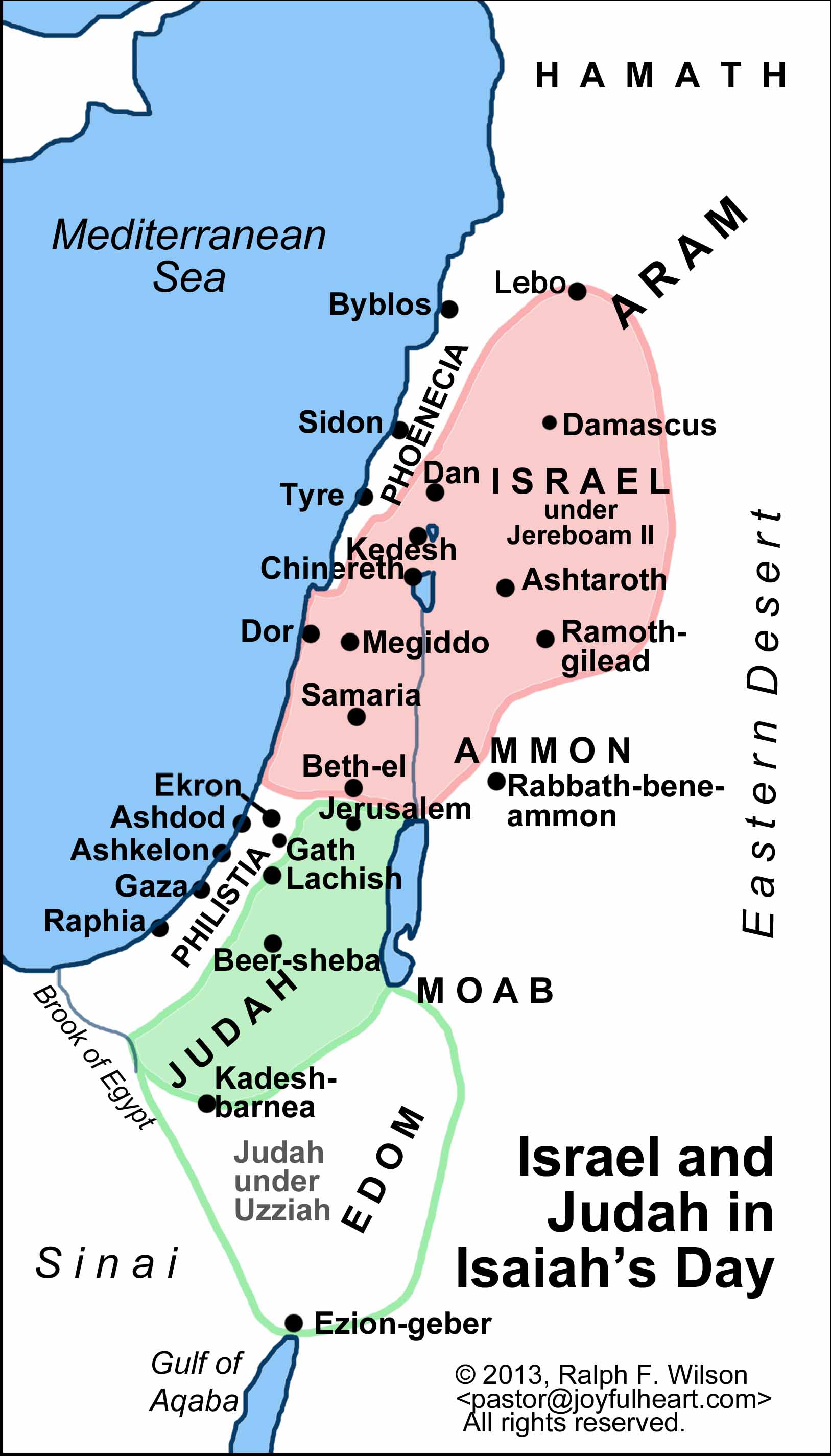
2 Chronicles 30:5 And they [see verse 2 above] established a decree that a proclamation should go through all Israel, from Beersheba to Dan, that they should come and keep the Passover to the Lord God of Israel at Jerusalem; for the multitude had not done it lately according to the Scripture.
Remember that Jeroboam had torn the ten tribes of Israel away from the united kingdom of David, Solomon, and initially Rehoboam, Solomon’s son (1 Kings 11:43). As Jeroboam’s first action as king of the northern ten tribes, he placed two golden calves (1 Kings 12:27-30). He put one calf in Bethel on the southern border. The other he placed in Dan, near the northern border at that time. He placed these specifically so that the people of Israel would not go to Jerusalem to worship there, as the Lord had decreed.
THE INVITATION
And here is King Hezekiah of Judah, sending out a proclamation to the hostile north to invite them to celebrate the Lord’s Passover in Jerusalem.
2 Chronicles 30:6 And the posts went with the letters from the king and the princes to all Israel and Judah, according to the command of the king, saying, Children of Israel, return to the Lord God of Abraham, Isaac, and Israel, and bring back them that have escaped, even those that were left of the hand of the king of Assyria. 7 And be not as your fathers and your brethren, who revolted from the Lord God of their fathers, and He gave them up to desolation, as you see. 8 And now harden not your hearts, as your fathers did; give glory to the Lord God, and enter into His sanctuary, which He has sanctified forever, and serve the Lord your God, and He shall turn away His fierce anger from you. 9 For when you turn to the Lord, your brethren and your children shall be pitied before all that have carried them captives, and He will restore you to this land; for the Lord our God is merciful and gracious, and will not turn away His face from you, if we return to Him. (CAB, LXE)
ISRAEL’S RESPONSE TO THE INVITATION
How did the northern people of Israel respond?
and they laughed them to scorn, and mocked them. (2 Chronicles 30:10)
Nevertheless…
11 But the men of Asher, and some of Manasseh and of Zebulun, were ashamed, and came to Jerusalem and Judah.
THE LORD BLESSES THE FAITHFULNESS OF THE PEOPLE OF JUDAH
The actions of Hezekiah and all the people of Judah pleased the Lord. And he blessed them.
2 Chronicles 30:12 At the word of the Lord, the hand of God was on Judah to give them singleness of heart to obey the command of the king and the leaders.
Summary to This Point
1. I’ve gone into historical details more than usual in this post. Second Chronicles records a wonderfully rare coming together of all the people of Judah to faithfully worship the Lord. This happened completely because of one man’s leadership, good King Hezekiah. The story gets even better as Scripture progresses.
Hezekiah was young, still in his twenties, when all these events occurred. The reason I am building such a detailed background is so that we can see how easy it was for Hezekiah to give in to pride in his older years. His spiritual successes and leadership skills were enormous. Because in the end he gave in to pride, he provides a warning for all of us.
There is a popular verse that has been in circulation for a number of years. It has to do with beseeching the Lord in prayer. King Hezekiah is the very embodiment of this verse.
2 Chronicles 7:14 if my people who are called by my name humble themselves, and pray and seek my face and turn from their wicked ways, then I will hear from heaven and will forgive their sin and heal their land. (ESV)
2. Hezekiah was a great leader who inspired people of many backgrounds to follow him. Levites, priests, the assembly of elders, the people as a whole, and even a few people from hostile Israel to the north all united to follow his lead in turning back to worship the Lord.
There is still more for us to see. But because this post is already long enough, I will continue in Post #82.
To be continued…
King Hezekiah-Overview: Isaiah Journal 76
By Christina M Wilson. Published simultaneously at King Hezekiah-Overview: Isaiah Devotional Journal 76 – justonesmallvoice.com.
Isaiah 36-37 Septuagint Modernized NETS
King Hezekiah-Part One: Overview
Four narrative chapters concerning King Hezekiah bring the first portion of the prophetic book of Isaiah to a close. At the same time, these chapters serve to introduce the latter half of Isaiah. Barry Webb calls them a “bridge” between the two major portions of the book (1).
Even casual readers will notice that the first portion of Isaiah differs from the latter portion in tone and content. Speaking in general terms, the first portion represents God speaking harshly to his people in terms of accusation and judgment. Historically, the first portion encompasses the permanent carrying off into captivity of the northern kingdom. It also prophesies the carrying off of Judah into exile more than a century later.
Isaiah also judges the nations in the harshest of terms, providing much end time material. Not all the end times, or eschatological, material is bad news, however. Interspersed throughout the judgment of the nations are passages of hope in a future Messiah. This Messiah will bless not just Judah and Jerusalem, but the whole world. This includes Gentiles.
The Lord speaks more fully in the second portion of the book. He develops in greater detail the nature of the coming Messiah. And, for the first time, he introduces the suffering which will characterize Messiah’s life. Overall, however, Isaiah’s message is one of comfort, hope, restitution, and glory.
Who Is King Hezekiah?
Four chapters of straight narrative in the prophetic book of Isaiah is unusual in itself. These chapters resemble a stand alone packet. Indeed, they are a packet, because they appear in 2 Kings 18:13, 17-20:21 in much the same form. This history appears in 2 Chronicles 32:9-26, as well, though shorter. 2 Chronicles devotes four entire chapters to Hezekiah’s complete reign, 2 Chronicles 29-32. Does a reader get the impression that there is something about King Hezekiah which God wants us to grasp?
2 Chronicles records this about King Hezekiah:
20 Thus Hezekiah did throughout all Judah, and he did what was good and right and faithful before the LORD his God. 21 And every work that he undertook in the service of the house of God and in accordance with the law and the commandments, seeking his God, he did with all his heart, and prospered. (2 Chronicles 31:20-21 ESV)
Scripture also reports this:
22 So the LORD saved Hezekiah and the inhabitants of Jerusalem from the hand of Sennacherib king of Assyria and from the hand of all his enemies, and he provided for them on every side. (2 Chronicles 32:22 ESV)
Christianity’s “Every Person”
Hezekiah (though he predates the incarnation) represents what it means to follow Christ and be “Christian.” Within the Christian world, he would be an “every person.” Scripture makes clear that Hezekiah, as an “every person,” was not perfect (Isaiah 38:3 and 39:6-8). Concerning his imperfections, he resembles King David. But also like David, Hezekiah’s heart of faith, expressed by his actions, remained loyal and steadfastly true to his God. I believe the Bible contains so many chapters devoted to Hezekiah’s life and actions because God holds him up as a model for us to imitate.
Facts of King Hezekiah’s Reign
Isaiah’s period of prophecy and King Hezekiah’s reign mostly overlap (Isaiah 1:1 and 39:8). Apparently, Isaiah ceased prophesying some time before Hezekiah died (Isaiah 1:1). This extensive overlap carried practical implications. Because of Isaiah’s physical proximity to Jerusalem and its king, the prophet and Hezekiah interacted on major occasions, such as the invasion by the Assyrians. Also, because of Isaiah’s importance as a prophet, he would naturally have much to say to and about Judah’s king.
Flashback
God himself excoriated the “apostate children” in Isaiah 30:1 forward (Septuagint). In the post for that chapter, I disagreed with many commentators by making the case that verses 1-18 applied not to Judah but to Israel. Given the Bible’s witness to the favor God granted King Hezekiah and his faithful heart, I stand by that assessment. God would never speak to his faithful children using the words he uses to chastise the hard hearted, distant, and disobedient children of chapter 30. Rather, when Scripture does portray the failings of Hezekiah’s character (Isaiah 39 and 2 Chronicles 32:24-31 Septuagint), it does so without the harsh, condemnatory words of Isaiah 30:1-17. The link to the prior post is here: ISAIAH 30 SEPTUAGINT-TWO KINGDOMS: JOURNAL 64.
__________
1 Webb, Barry. The Message of Isaiah: On eagles’ wings, part of the series, The Bible Speaks Today, Old Testament portion edited by J. A. Motyer. Published by Inter-Varsity Press, Downers Grove, Illinois, 1996, page 147.
 One Small Voice