
Home » Posts tagged 'Bible Study Psalms' (Page 2)

Tag Archives: Bible Study Psalms

Penitential Psalms: Psalm 102–Who Is Speaking?


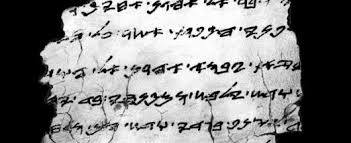
The Old Testament was originally written mostly in Hebrew. About three centuries before Christ, translations of the Hebraic Scriptures into Greek became common. These translations collectively are called the Septuagint. The word “septuagint” means seventy, and unverified tradition holds that seventy scholars sequestered themselves while making the translation at the request of King Ptolemy II for the national library in Alexandria. Extant Greek manuscripts, translated from Hebrew, are older than the oldest extant Hebrew manuscripts by one to two centuries (1). The New Testament, on the other hand, was originally written in Greek, and its authors regularly read and quoted from the Old Testament Septuagint. Knowing this information helps to clarify why the author of the New Testament’s Letter to the Hebrews included Psalm 102:25-27 in his list of Old Testament texts that demonstrate God’s calling Jesus Christ his “Son” (2).

In the first chapter of Hebrews, the biblical author quotes several passages from the Old Testament in which God speaks directly to his Son. The three occurrences of God speaking directly to his Son are found in verse 5, quoting Psalm 2:7; verses 10-12, quoting Psalm 102:25-27; and verse 13, quoting Psalm 110:1. In the first and third of these quotations, the reader readily discerns the voice of God speaking to a second person. The text clearly states that this is so. However, when reading the quotation from Psalm 102, as written in most English translations, the reader may wonder how it is that these particular verses refer to the Son? How did the writer of the Letter to the Hebrews arrive at his conclusion? Many commentators simply skip past the confusion by stating that the Hebrews’ author, divinely inspired, applied these verses to Christ. But this begs the question, for if so, then why so? Why these verses in particular?

Knowing that the author of Hebrews was quoting from a Greek text helps tremendously. In fact, it solves the puzzle. The complete context in the Septuagint clearly indicates a dialogue between two speakers. That is, the Septuagint text tags the verses immediately preceding the quotation found in Hebrews with clear transitional phrases of dialogue,

“23 He answered him in the way of his strength: tell me the fewness of my days. 24a Take me not away in the midst of my days: 24b [the reply from the second speaker immediately follows here without an identifying tag, but it is clear from the context that a second speaker answers the requests of the first speaker] thy years are through all generations. 25 In the beginning thou, O Lord, didst lay the foundation of the earth…” (3).

The Septuagint from which the author of Hebrews quotes (scholars overall agree that the writer is quoting from the Greek text) clearly distinguishes with speech labels the presence of two speakers in dialogue with each other. But the English translations of Psalm 102, which are based upon the Masoretic text (Hebrew), fail to include the tag words, “He answered him…”, found in verse 23a. And the author of the Letter to the Hebrews begins his quotation of Psalm 102 with verse 25, which occurs after the second speaker, God, has already begun speaking. The quotation in Hebrews does not contain the dialogue tags, or labels, but the author implicitly acknowledges their occurrence and assumes that his readers also know this fact. The assumption of dialogue is central to the logic and force of the author’s argument. He presents the Old Testament text as an example of God speaking directly to his Son.

Conclusion: While English versions translated from the Hebrew Masoretic text of Psalm 102:23 do not include the three words, “He answered him…”, the author of Hebrews implicitly acknowledges the prior occurrence of these three words as he begins his quotation in verse 25, which falls after their occurrence in the Septuagint from which he quotes. That the author implicitly acknowledges dialogue in the passage is clear from the entire context of Hebrews 1. The writer of the Letter to the Hebrews is demonstrating how Old Testament scripture accords Christ the status of Son. Among his proof texts are several verses that indicate direct speech by God to his Son. Among these is Psalm 102:25-27, quoted in Hebrews 1:10-12. It is clear that the Hebrews’ author is attributing the quotation as a speech statement by God to his Son. Again, the Son is the one to whom God is speaking, both in Hebrews 1:10-12 and in that passage’s source, Psalm 102:25-27. The Son is he to whom God replies. This fact, in turn, forces the reader to conclude that the “poor” man who pours out his supplication to the Lord, whose voice we hear so plaintively in the first eleven verses of this “penitential” psalm, is none other than the Son whom God addresses directly as such in verses 24-28 LXX (Septuagint).

Significance: What is the answer to the big question, “So what?” The following blog in this series will, Lord willing, provide answers to that question.

Link to Next Post


__________

1 Reference works concerning the textual history of the Septuagint include 1) Karen H. Jobes & Moisés Silva. Invitation to the Septuagint. Grand Rapids: Baker Book House, 2000. 2) H.B. Swete, An Introduction to the Old Testament in Greek, Cambridge: University Press, 1900. 3) Timothy Michael Law. When God Spoke Greek: The Septuagint and the Making of the Christian Bible. New York: Oxford University Press, 2013.

2 Although Hebrews begins speaking of God’s Son in verse 2 of chapter 1, the author specifically names Christ as the Son in Hebrews 3:6, “But Christ is faithful over God’s house as a son…”

3 Brenton, Sir Lancelot C. L. The Septuagint Version: Greek and English. Grand Rapids: Zondervan Publishing House, 1970. Notice that the verse numbering differs from most English versions.

The NETS Bible (Pietersma, Albert, ed. A New English Translation of the Septuagint: The Psalms. Translated by Albert Pietersma. New York: Oxford University Press, 2007. Available online at http://ccat.sas.upenn.edu/nets/edition/24-ps-nets.pdf. Accessed April 27, 2018) reads, “24(23) He answered him in the way of my strength, ‘Tell me the paucity of my days. 25(24) Do not take me away at the mid-point of my days,…”

In further confirmation of the Septuagint text, the Latin Vulgate, which translates the Greek, includes the words from Psalm 102:23, “He answered him…”

Penitential Psalms–Psalm 102: Why Penitential?


WE LEARNED what a truly penitential/repentant psalm looks like when we studied Psalm 51. This kind of psalm is rare in the Psalter. Psalm 102(101 LXX) immediately follows Psalm 51 in the list of seven traditional penitential psalms (6, 32, 38, 51, 102, 130, 143). It bears little resemblance to Psalm 51. Why does the list include Psalm 102?

First, a careful line by line search of Psalm 102 (ESV) (Greek and Brenton English) (English NETS) reveals not a single syllable concerning sin or repentance. Words and phrases present in Psalm 51, such as “blot out my transgressions” (v 1) and “wash me thoroughly from my iniquity and cleanse me thoroughly from my sin!” (v 2) simply do not occur anywhere in Psalm 102.

Second, what Psalm 102 does contain is a poetic expression of great suffering on the part of the speaker. His suffering is summed up well in the superscription given the psalm before the first verse begins, “A Prayer for the Poor; when he is deeply afflicted, and pours out his supplication before the Lord,” (Psalm 102:1 LXE). While of course this title is not part of the biblical text itself but an ancient editorial addition, the Greek word for “Poor” (πτωχός, ptoe-koes) is a word often used by Jesus in the New Testament. We find one example in the first beatitude, “Blessed are the poor in spirit, for theirs is the kingdom of heaven,” (Matthew 5:3). Thayer describes the meaning of this word “poor” as, “destitute of wealth, influence, position, honors; lowly, afflicted,” (Thayer, A Greek-English Lexicon of the New Testament). As explained in greater depth in a previous chapter (Penitential Psalms: A Big Mix-Up?) one possible explanation of the origin of both the word “penitential” and the list of seven psalms is the Greek “pen” word family. One of these “pen” stem words is πένητος (pen-ee-tohss). A “penitose” person is a poor person. Note the similarity to English “penitent.” “Penitose” is a synonym of “Ptoe-koes,” “poor,” which we just saw in the title above Psalm 102.

So, Psalm 102 is the speech of a poor, afflicted person who pours his heart out to the Lord. What else do we find in Psalm 102? Thirdly, we find the psalmist’s direct claim that he has enemies (v 8) who cause him pain, and further, that God himself (v 10) in “anger” and “wrath,” or “raging fury” (NET) has “lifted me up, and dashed me down,” (LXE, Septuagint in English). These last two features, both enemies causing pain and God’s wrath causing pain, are most strongly present in penitential Psalms 6, 38, and 102. Of these three, only Psalm 38 expresses sorrow for sin. Psalm 102, as mentioned in point one above, expresses neither confession nor remorse for anything.

Conclusion: Psalm 102 is “penitential” in the sense that it is the speech of a poor and needy person crying out to the Lord for help. The speaker’s suffering originates in persecution by both enemies and the Lord. There is neither acknowledgement of sin (confession) nor contrition (repentance) of any kind. The more we examine the seven so-called penitential psalms, the one item we find common to all of them is a deep humility of spirit as the psalmist addresses the Lord. To this author, it seems likely that, were we beginning fresh today, we would not begin to think of grouping these seven psalms in a cluster as our church forefathers did.

A Peek Ahead: There is much more to say about Psalm 102, such as, Who is speaking? This topic will form the content of a future post.

Penitential Psalms: Psalm 51–A Personal God of Love


It happens to be Maundy Thursday and tomorrow is Good Friday. Psalm 51 is an Easter Song if there ever was one. Psalm 51 is difficult for me and for everyone who strongly feels that Christ is the primary speaker in David’s psalms. The speaker in this psalm unquestionably confesses his personal guilt and sin. And Christ is sinless and holy. How can the speaker be Christ? And yet, that is my position.

Craig C. Broyles writes that of the seven penitential psalms (Pss. 6, 32, 38, 51, 102, 130, and 143), Psalm 51 is unique in its exclusive focus on sin (Broyles, p226). He also writes that among the psalms as a whole, it is “unrivaled … for its interest in inner transformation” (Ibid.). While Broyles in no way claims Christ as speaker, he states that within the psalm itself there is no reason to see David as speaker (Ibid., p 226-227). The superscripts were written by an ancient editor after the fact. None of the superscriptions above the psalms is to be considered Scripture.

Why is it so difficult to receive Christ as speaker in Psalm 51? Consider these words:

Have mercy on me, O God, according to your steadfast love; according to your abundant mercy blot out my transgressions. 2 Wash me thoroughly from my iniquity, and cleanse me from my sin! 3 For I know my transgressions, and my sin is ever before me. 4 Against you, you only, have I sinned and done what is evil in your sight, so that you may be justified in your words and blameless in your judgment. 5 Behold, I was brought forth in iniquity, and in sin did my mother conceive me. (Psalm 51:1 ESV)

Turn away thy face from my sins, and blot out all mine iniquities. (Psalm 51:9 LXE)

I must speak personally here, but I think I speak for many. To attribute the above words to Christ stirs up uncomfortable feelings of shame that are difficult to deal with. If Christ the sacrificial lamb speaks these words upon the painful cross, then that means that he the sinless one is speaking these words for me. It’s extremely humbling to go before the throne of grace knowing that He knows. It’s humbling to agree with him that yes, I did do these things. But what is most humbling is to see the big problem for God that my sin caused and to watch, childlike, as he himself pays the cost to fix the damage my sinful actions brought about. Yes, it’s very childlike. Come on, folks, admit it. God went to a lot of trouble to fix the problem humanity’s sin caused and it cost him a great deal. Because he is who he is, we in our puniness will never be able to possibly imagine what it was like for God’s Son, God himself, our creator, the all-powerful one, to become one of us and to take upon himself our sin.

Psalm 51 can be a great blessing for everyone whose sin is great. So often we hear about those who feel that God could never forgive their sin because of its excessive nature. “God can forgive others,” they may think, “but he could never forgive me.” Yes, he could! And he did! The actual words of the psalm itself don’t say what the sin was.  When Israel’s high priest used to lay his hands upon the head of the scapegoat, he wasn’t just symbolically giving up the low-level sins of the people, but all their sins (Leviticus 16:7-10). God knows. Jesus on the cross knew what the sins were. He confessed them as his own.  

What might the following words mean when translated into the actual experience of the One hanging on the cross?

For our sake he made him to be sin who knew no sin, so that in him we might become the righteousness of God. (2Corinthians 5:21 ESV)

Might such a person, who has himself become sin, be able to confess the words of Psalm 51? For the sake of all who might ever believe in him, I say yes (1).

__________

1 Because Scripture calls for a witness of at least two, “Where two or more are gathered in my name…” “…take one or two others along…,” I’d like to bring along with me John Barclay. He writes:

… there is no blasphemy (as many have most blasphemously alleged there is) in this manner of interpretation [Christ as the sole speaker in all of Psalm 51]; which must either be admitted, or the New Testament made void! (Barclay, page 218)

While Barclay in his preface has multitudes of arguments to support his attributing all of Psalm 51 to Christ as speaker, one of his main arguments is the existence of parallel passages: Psalm 51:16-17 is parallel to Psalm 40:6. Psalm 40:6-8 is quoted in Hebrews 10:5-7. There the words are attributed directly to the mouth of Christ, “Therefore, when Christ came into the world, he said…” (Ibid.). Barclays’s logic is mathematical: If A = B and C = B, then A = C. Since the New Testament in Hebrews attributes Psalm 40:6 to Christ as speaker, then a parallel passage in another psalm (Psalm 51:16) must also be attributed to Christ (Barclay, page 47). It also follows that since there is one speaker throughout all of Psalm 51, if one portion is spoken by Christ, then the whole psalm, by the rules of plain English, must also be spoken by Christ (Ibid., page 42-43).

While I agree with this “head” explanation, I also fully agree with Barclay elsewhere, when he states that seeing Christ as our intercessor and mediator in Psalm 51 is mostly a matter of heart. Christ fully and consciously washed our sins away in his own blood. Why would anyone want to maintain that Christ our mediator did not stand in for us and acknowledge our sin as his own? If this were not so, Barclay asks, then how can we have confidence that the righteousness of Christ is ours? In other words, “How could sinners call his righteousness theirs, if he had not called their sin his?” (Ibid., page 71). And if our theology permits Christ to call our sin his, then in honesty, we cannot forbid him from confessing it. Yes, to see Christ as the speaker of Psalm 51 is to see what substitutionary atonement meant for the Lamb of God.

Many blessings upon you all; may this Easter be among the happiest you have ever known.


For Lovers of God: Psalm 33

Psalm 33 1) beautifully describes God’s nature as reflected in his many activities and 2) encourages people everywhere to worship him loudly and clearly with joyful praise and celebration.

myjoyonline.com

Psalm 33 opens with a clarion call to praise that pictures a scene of genuine celebration:

1 Sing joyfully to the LORD, you righteous; it is fitting for the upright to praise him.
2 Praise the LORD with the harp; make music to him on the ten-stringed lyre.
3 Sing to him a new song; play skillfully, and shout for joy. (Psalm 33:1-3 NIV, 1984)

Verses 4 and 5 give four reasons to celebrate God:

  1. For the word of the LORD is right and true; (vs 4)
  2. He is faithful in all he does (vs 4)
  3. The LORD loves righteousness and justice; (vs 5)
  4. the earth is full of his unfailing love. (vs 5)

The body of the psalm develops these four points:

1. For the word of the LORD is right and true (vs 4)

God created by his Word (see footnote 1, technical).

6 By the word of the LORD were the heavens made, their starry host by the breath of his mouth.
7 He gathers the waters of the sea into jars; {Or sea as into a heap} he puts the deep into storehouses.
8 Let all the earth fear the LORD; let all the people of the world revere him.
9 For he spoke, and it came to be; he commanded, and it stood firm.

2. He is faithful in all he does (vs 4)

10 The LORD foils the plans of the nations; he thwarts the purposes of the peoples.
11 But the plans of the LORD stand firm for ever, the purposes of his heart through all generations. 

As we consider today’s shifting political market and humankind’s long world history, we see that various nations and people groups rise and fall. “But the plans of the LORD stand firm for ever, the purposes of his heart through all generations.” God is faithful, unchanging, ever true, and powerful.

3. The LORD loves righteousness and justice; (vs 5)

12 Blessed is the nation whose God is the LORD, the people he chose for his inheritance.
13 From heaven the LORD looks down and sees all mankind;
14 from his dwelling-place he watches all who live on earth–
15 he who forms the hearts of all, who considers everything they do.
16 No king is saved by the size of his army; no warrior escapes by his great strength.
17 A horse is a vain hope for deliverance; despite all its great strength it cannot save.

The LORD blesses those who follow his ways (vs 12). His ways are righteousness and justice. God did not simply create and then disappear into the vastness of an infinite space (deus ex machina). Verses 13-15 state that God looks and sees everyone everywhere. He judges by his own standards of uprightness, of righteousness and justice. Verses 16-17 state that history is full of examples in which leaders with great armies, great strength, and the best of equipment find all those insufficient to save. It is God who saves.

4. the earth is full of his unfailing love. (vs 5)

18 But the eyes of the LORD are on those who fear him, on those whose hope is in his unfailing love,
19 to deliver them from death and keep them alive in famine.

The LORD knows his own. He watches over them carefully, minutely, and always. The text describes God’s people as those who love him, respect, trust in, and obey him (text: fear him) as well as place their hope in God’s loyal and faithful actions and attitude of love towards them. We might call these actions faith. God delivers from death those who place their faith in him, who give their loyalty to him. He also keeps them alive in famine.

What should our response be?

Verses 20 and 21 recap the introductory verses 1-3.

20 We wait in hope for the LORD; he is our help and our shield.
21 In him our hearts rejoice, for we trust in his holy name.

Verse 22 concludes with a prayer that 1) asks the faithful God to continue blessing his people just as he has done in the past, and 2) expresses the continued loyalty of the people.

22 May your unfailing love rest upon us, O LORD, even as we put our hope in you.

Application:

Explanations of a psalm are never as good as the psalm itself, just as reading a synopsis of a book or movie is never as good as experiencing. When someone tells about a great time they had, the description comes nowhere near the great time itself. Explanations like the above serve at best as a roadmap to lead the way or guideposts to point out interesting sights. Whereas experiencing a psalm and being swept up into its mood or passion can happen in just a few short minutes, digesting an explanation can dampen the joy of movement. So read the psalm when you are fresh and celebrate God’s ever present goodness.

_______________

Translation Note: Verse 6 NET translations differs significantly from the original Hebrew, the Greek  Septuagint, and most modern English translations. A detailed analysis of this verse can be found here: A Criticism of NET Word Choice in Psalm 33:6.


Psalm 6: Enter God’s Wrath

jesushand

No copyright information


Continuing the quick descent from the bright and confident promises of Psalms 1 and 2 to the sufferings expressed in Psalms 3-5,  Psalm 6 adds a further element: God’s wrath upon the righteous speaker. Psalm 2:4-5 and 9-12 reveals God’s wrath against the wicked; here we see that wrath causing the Righteous One to suffer.

Psalm 6:1 To the choirmaster: with stringed instruments; according to The Sheminith. A Psalm of David.

O LORD, rebuke me not in your anger, nor discipline me in your wrath.
2 Be gracious to me, O LORD, for I am languishing; heal me, O LORD, for my bones are troubled.
3 My soul also is greatly troubled. But you, O LORD– how long?
4 Turn, O LORD, deliver my life; save me for the sake of your steadfast love.
5 For in death there is no remembrance of you; in Sheol who will give you praise?
6 I am weary with my moaning; every night I flood my bed with tears; I drench my couch with my weeping.
7 My eye wastes away because of grief; it grows weak because of all my foes.
8 Depart from me, all you workers of evil, for the LORD has heard the sound of my weeping.
9 The LORD has heard my plea; the LORD accepts my prayer.
10 All my enemies shall be ashamed and greatly troubled; they shall turn back and be put to shame in a moment. 5 The arrogant cannot stand in your presence. You hate all who do wrong;

I. How do we know that the speaker of Psalm 6 is righteous?

A. We take a canonical, devotional view that presupposes all the psalms to be united with all Scripture and that unless otherwise directly noted, the first person singular speaker of all the psalms is none other than Messiah, the Son of God, God’s appointed King. By definition, God is righteous, and his Son is righteous, even during his incarnation as a human (2 Corinthians 5:21).

Discussion: First, can the above statement be proven from the Psalms themselves or other Scripture? In a legal sense, no. But neither can it be disproven. This is why commentaries are written. They all take a different point of view. The presuppositions stated in point A above can be reasonably and intellectually defended and demonstrated with quantities of biblical evidence, which is what the several posts in this blog are all about. But no person can provide an airtight proof one way or the other that the Psalter is largely spoken by Christ.

The world of biblical academia has not changed from Jesus’ day to our own. In the gospels, many conversations between Jesus and the “lawyers” of the law, the scribes and Pharisees, record Jesus’ attempts to pierce through combative academics to reach the hearts of people. I believe it safe to say that God does not care about a person’s intellectual understandings about his Word. God wants faith (Hebrews 11:6). Faith is like insight or like solving a mathematical word problem: there comes a point when a step must be made, no matter how small, over a gap that human logic and reason cannot bridge. God as Creator designed it to be so. Belief in God comes by his grace alone.

Second, taken on an individual basis, some psalms, such as Psalm 2, demonstrate the presence of Christ more readily than others. On the other hand, without faith, it appears impossible that a psalm such as Psalm 6 could be proven to speak words of Christ. However, as shown in prior articles on Psalms 1 and 2, it is literarily reasonable to suppose that all the psalms in the Psalter are about Christ or spoken by him. Therefore, it is not necessary to continually prove and demonstrate this point for each and every psalm. Over the five decades since Brevard Childs wrote his boldly conversation-opening book Biblical Theology in Crisis, academia has permitted a greater interconnectedness among the various portions of Scripture, including both the Old and New Testaments. (See, for example, works by Matthew W. Bates.)

B. Even though Psalm 6 is listed as the first of seven penitential psalms by the early church (The seven penitential psalms are 6, 32, 38, 51, 102, 130, and 143, C. Hassell Bullock, 207), no sins are mentioned (Craig C. Broyles, 63). Robert S. Hawker explains this feature.

“But the beauty of the Psalms is as it beholds Christ in his strong crying and tears, when taking upon him our nature, and becoming sin for the church, that the church might be made the righteousness of God in him. If we eye the Redeemer as the sinner’s surety, we shall then enter into a right apprehension of what he saith under the divine chastisement for sin.” (Hawker, 178, Psalm 6:2)

C. In spite of the wrath of God being displayed against the speaker (vss 1-3), God hears and responds to the psalmist’s cry for mercy and delivers from the grave and from a multitude of enemies (vss 8-10). Within the body of Psalms, God never comes to the aid of his enemies, but always favors the righteous. Everyone who calls on the name of the Lord will be saved.

II. What does Psalm 6 add to the Psalter?

The psalms are prophetic. Their main purpose, or one of their main purposes, is to prophesy of the Christ. For the first time in the Psalter, Psalm 6 reveals the theme of God’s wrath against his Son, his Messiah, his King (if the reader connects this psalm with Psalm 2). Psalm 6 also reveals God’s deliverance after wrath.

III. Why read Psalms this way?

Why does this writer invest so much of her time and energy to communicate that the Psalms contain the words of Christ and of God his Father to him? For one reason only: to encourage the reader to pick up the Psalter in a quiet moment of devotion, to lay all academics aside, to ask God to speak to her personally, and to hear in a life-changing way the heart of God expressing itself in love for her the reader through the sacrificial death of his Son on the cross on her behalf: to experience God’s love for you, the reader.

I personally find that reading a psalm out loud when no one is present and there will be no opportunity for interruption is a good way to hear the voice of God through these living words.


Link to next post in this series

Link to prior post in this series 

Link to Contents for this series


Psalm 5: Okay, Then–Define “Unrighteousness”

Pixabay


The important thing is to go to God. That right there is how Psalm 5 defines righteousness. God himself does all the rest.


1 For the director of music. For pipes. A psalm of David. Listen to my words, LORD, consider my lament.
2 Hear my cry for help, my King and my God, for to you I pray.
3 In the morning, LORD, you hear my voice; in the morning I lay my requests before you and wait expectantly.
4 For you are not a God who is pleased with wickedness; with you, evil people are not welcome.
5 The arrogant cannot stand in your presence. You hate all who do wrong;
6 you destroy those who tell lies. The bloodthirsty and deceitful you, LORD, detest.
7 But I, by your great love, can come into your house; in reverence I bow down toward your holy temple.
8 Lead me, LORD, in your righteousness because of my enemies– make your way straight before me.
9 Not a word from their mouth can be trusted; their heart is filled with malice. Their throat is an open grave; with their tongues they tell lies.
10 Declare them guilty, O God! Let their intrigues be their downfall. Banish them for their many sins, for they have rebelled against you.
11 But let all who take refuge in you be glad; let them ever sing for joy. Spread your protection over them, that those who love your name may rejoice in you.
12 Surely, LORD, you bless the righteous; you surround them with your favor as with a shield. (Psalm 5 NIV)

The Psalter has few characters: God, His Son, God’s friends, and God’s enemies. In describing the Psalter, no matter how politically objectionable such a description may appear, there are few to no tones of gray, just black and white. One of the basic black and white facts of the Psalter is the contrast between the righteous and the unrighteous. Psalm 5 contributes to the Psalter the first detailed portrait of unrighteousness and contrasts this portrait with details about the righteous.

I. The speaker is an unnamed single person throughout, although verse 12, the closing verse, could be spoken by the ever-present narrator/chorus common to many of the psalms, especially in the closing verses. Clearly, the speaker places himself among the righteous.

II. Contrasts between the righteous and the unrighteous.

A. The righteous speaker of the psalm–

1. approaches God to reverently speak to him in worship and humility (verses 1-3 and 7b).

2. God receives, welcomes, enjoys, blesses, and protects the righteous who come to him (verses 7a and 11-12).

3. The one and only positive characteristic of righteousness described in this psalm is the fact of the righteous ones approaching God to speak with him and shelter in his presence. 

B. The characteristics of those who come are–

1. the fact that they come

2. they want to speak with God and shelter in his presence

3. they believe in God’s existence and voluntarily place him high above themselves

“… LORD …” (vss 1, 3, 6, 8, 12)

“… my King and my God …” (vs 2)

“… O God …” (vs 10)

4. they are happy and joyful when protected by God (vs 11)

5. and by inference, they are truthful, not arrogant, and not desirous of harming others (vss 4-10).

C. The unrighteous, as described by the speaker of the psalm–

1. do not please God (vs 4a) and are not welcomed by him (vs 4b)

2. they are arrogant and cannot stand before God, who hates all wrong, including arrogance (vs 5).

3. they tell lies, seek to harm others (bloodthirsty), and are deceitful (vs 6)

4. the Lord, who by inference is honest, loving, and truthful detests them (vs6)

5. they display enmity towards the speaker

6. all their words are untrustworthy, reeking of death, and deceitful (vs 9)

7. their hearts are filled with ill will (malice) toward others (vs 9)

8. they plan intrigues and they rebel against God (vs 9)

9. and their end is to be banished (vs 10).

III. What can we make of all this?

A. If the reader is already on God’s side and knows it, then Psalm 5 gives comfort and encouragement (vss 1-3, 7, 11-12).

B. It seems reasonable to conclude that Jesus Christ is the speaker of this psalm, because only a completely holy and humble one could in honest self-examination speak such stark realities, and, we know that Jesus had many enemies who verbally attacked him on every occasion. What we know of his life, words, and actions corresponds well with the portrait of the psalmist given here.

C. If the reader is not on God’s side and knows it, most likely Psalm 5 would add fuel to an already angry fire.

D. If the reader has academic interest only, there might not be a personal response.

IV. My Personal Takeaway

Love for God is a gift from God (Ephesians 2:8-10). Fear of God is a gift from God (Proverbs 9:10). The very best action in life that anyone can ever take is to approach God in order to ask his forgiveness and blessing. A first step is to approach God and ask him, period. What are the questions? God, do you exist? God, do you see me? A second step is to approach God with personal statements that summarize current heart conditions (confession) and combine those with a request. To request from God is to express humility before him. For example, “God, do you exist? I don’t see you, I don’t hear you, you are not real to me, but I want you. Please show yourself to me in a way that I can see, hear, and understand.” Another example, “God, right now I hate you. But I’m not satisfied with this condition. Please help me not to hate you.” Or, “God, I don’t believe in you, but if you are real, I want to know that. Please take away the hatred in my heart that I have towards you, so that I may see you.” There are endless possibilities, but one final example, “God, I think that I am righteous. What do you say?”

V. Conclusion

As I read Psalm 5, I see two kinds of people: 1) there are those who want an all-powerful, good God, and 2) there are those who don’t want such a God. In life, we ourselves cannot classify people as starkly black or white, starkly righteous or unrighteous. Our world is gray. We see so-called bad people doing good things and so-called good people doing bad things. We see all people doing both good things and bad things. This is why we are not to judge others. We can only judge ourselves, and even that judgment may be skewed; our own vision is not to be trusted.

God’s vision is much clearer than ours, and Scripture teaches that God has an exact, x-ray-like vision that makes no mistakes (Hebrews 4:12). If you want God, then go to him; he will not turn you away. If you do not want God, but you want to want him, then go to God and ask him for that. If you hate God, go to him anyway, and just say to him, “Oh all right! Why should I?” If you don’t care about God, then go to him anyway and say, “God, I don’t care about you one way or the other. You are irrelevant to me. But if you want me, here I am. You know where to find me. I’m not helping you in that. But I’m here.”  The important thing is to go to God. That right there is how Psalm 5 defines righteousness. God himself does all the rest. If you don’t know how to go to God, then go to God and ask him to show you how you should go to him…and on and on and on.

19 And this is the judgment: the light has come into the world, and people loved the darkness rather than the light because their works were evil. 20 For everyone who does wicked things hates the light and does not come to the light, lest his works should be exposed. 21 But whoever does what is true comes to the light, so that it may be clearly seen that his works have been carried out in God.” (John 3:19-21 ESV)


Link to next post in this series

Link to prior post in this series 

Link to Contents for this series


Christ in the Psalms: An Annotated Bibliography Part 2

The content of this post has moved: Christ in the Psalms: Annotated Bibliography

Christ in the Psalms: An Annotated Bibliography Part 1

The content of this post has moved: Christ in the Psalms: Annotated Bibliography

14. Psalms 12, 42, 72, 102, 132: Reading Across Psalms for a Complete Messianic Portrait

Bibliography

Outline of Series

I. Introduction

A. General Comments

I recommend the tiny devotional Bible, 31 Days of Wisdom and Praise: Daily Readings from the Books of Psalms and Proverbs (See Bibliography). Although the publishers labeled the book “devotional,” it contains not a single word of commentary. It is, rather, a Bible. What makes it unique is the arrangement of the Psalms for the thirty-one days of consecutive reading. Day 1 contains Psalms 1, 31, 61, 91, and 121; Day 2 Psalms 2, 32, 62, 92, and 122; and so forth, each day following the same numerical pattern of adding thirty to arrive at the next psalm.

While there is nothing magical about this arrangement, it gives the reader opportunity to read across the Psalms in a way which, whether by chance or design, often provides a spiritually profitable mix. For those readers who are familiar with the author of this blog’s understanding that the Psalms are basically and wholly about Christ, reading across the Psalms in a single setting provides connections among them that otherwise might be missed in a sequential only reading. That is, if a person only reads the psalms in numerical order, portions of the back-and-forth dialogue among them might be missed.

For example, sometimes themes, or topics, become apparent when reading across. In my personal 31 Days Bible, I have written short thematic titles for some of the days, such as, “Yay, God!” for Day 3. This signifies for me that these psalms celebrate God’s victories. Again, I’ve written, “God Saves His Own,” for Day 11, and “War,” for Day 19. These examples are just my personal, devotional responses to what I read, as I discover what appear to be themes in a certain day’s grouping.

As another example, I find that some days contain sequences of the major events in Christ’s life, even though the numbers for the contiguous psalms are separated by thirty. These are the days I love the best. We see this in Day  28, where Psalm 88, which is often called the “darkest” psalm, is followed immediately by Psalm 118, a psalm filled with glory and light. Psalm 88 describes Christ’s crucifixion, his death, and his descent to the grave. Psalm 118, its sequel on Day 28, is a description of Christ’s resurrection and ascension to glory in tones of pure, joyful victory.

Psalm 88:15-18 From my youth I have been afflicted and close to death; I have suffered your terrors and am in despair. Your wrath has swept over me; your terrors have destroyed me. All day long they surround me like a flood; they have completely engulfed me. You have taken my companions and loved ones from me; the darkness is my closest friend.

Psalm 118:17-24 I will not die but live, and will proclaim what the Lord has done. The Lord has chastened me severely, but he has not given me over to death. Open for me the gates of righteousness; I will enter and give thanks to the Lord. This is the gate of the Lord through which the righteous may enter. I will give you thanks, for you answered me; you have become my salvation. The stone the builders rejected has become the capstone; the Lord has done this, and it is marvelous in our eyes. This is the day the Lord has made; let us rejoice and be glad in it.

In these two quotations placed side by side, we see the complete gospel: the wrath of God on account of sin poured out upon Christ, Christ’s death, and immediately afterwards, his resurrection and ascension to be the head of the church, the gates of righteousness having been opened to life.

B. Day 12

It is not hard to find meaningful groupings of psalms when using 31 Days of Wisdom and Praise. For today’s study, I chose Day 12, which includes Psalms 12, 42, 72, 102, and 132. In this grouping, we see 1) in Psalm 12, the battle line drawn between good and evil as the lies of the wicked versus the truthful goodness of God’s word. In verses 5 and 7  we also see a promise of the Lord’s rising up to take action, which is what God did in Messiah in the New Testament. We also find 2) in Psalm 42,  a faithful man who suffers, 3) in Psalm 72, prayers for Messiah the King, 4) in Psalm 102, a poor, afflicted man pouring out his heart to the Lord and to whom the Lord replies in strong terms, attributing divinity to him, and 5) in Psalm 132, a celebration of God’s victories over hardship and enemies in the life of King David, who is a royal type of Christ. In this final psalm, both the suffering and glorious victory of the great King are clearly presented together. What this sequence of five psalms accomplishes, therefore, is to link the suffering man with the glorious, divine, and victorious Creator King Messiah, a link which apparently nearly everyone in Jesus’ time missed.

After his resurrection, Jesus said to his disciples with reference to the Law, the Prophets, and the Psalms, “Thus it is written, that the Christ should suffer…” (Luke 24:44-46). But where in Psalms do we find that Messiah will suffer? Surely nowhere is such a direct statement made within the bounds of any single psalm. And yet, by reading across the psalms and by making reasonable literary connections among them, even as prompted by the Holy Spirit, we distinctly arrive at a portrait of Messiah that includes both suffering and glory, humanity and divinity. Such is “Day 12” in “31 Days of Wisdom and Praise.”


II. The Individual Psalms of Day 12


Psalm 12: God’s Word the Victor as the Battle Lines Are Drawn

1 Save, O Lord, for the godly one is gone;
    for the faithful have vanished from among the children of man.
Everyone utters lies to his neighbor;
    with flattering lips and a double heart they speak.

May the Lord cut off all flattering lips,
    the tongue that makes great boasts,
those who say, “With our tongue we will prevail,
    our lips are with us; who is master over us?”

“Because the poor are plundered, because the needy groan,
    I will now arise,” says the Lord;
    “I will place him in the safety for which he longs.”
The words of the Lord are pure words,
    like silver refined in a furnace on the ground,
    purified seven times.

You, O Lord, will keep them;
    you will guard us from this generation forever.
On every side the wicked prowl,
    as vileness is exalted among the children of man.

A. Theme: God’s Truth Defeats the Enemy’s Lie as the Battle Lines  Are Drawn

1.  Characteristics of Liars and Their Lies

a. Verse 1: They are the norm everywhere

b. Verse 2: Everyone hides the truth and speaks falsely to the people around them, saying one thing out loud and saying something quite different to themselves. They pretend to be pleased by others, to agree, and to like these others, their neighbors, while at the same time their hearts stand poised against them.

c. Verse 3: The liars give meaningless compliments and agreements and speak proudly of themselves.

d. Verse 4: Those who deceive think they can get away with everything.

e. Verse 5: The purpose of much of the false words is to oppress the already poor and needy.

(Note on Verse 5: New Testament writers often quote from the Septuagint, which was the translation of the Old Testament in common circulation during their day. The English translation of Septuagint verse 5 proclaims God’s mind to clearly speak, that is, to prophesy, his intentions regardingsalvation.

LXE Psalm 12:5 {011:5} Because of the misery of the poor, and because of the sighing of the needy, now will I arise, saith the Lord, I will set them in safety; I will speak to them thereof openly. [Brenton, BibleWorks, Septuagint numbering Psalm 11:5])

2. Characteristics of the Lord’s Words, Verse 6: The Lord’s words are pure–not mixed, not hiding double meanings, exact and to the point, reliable, and of great value.

B. Outcome: The Lord Fights and Vanquishes the Wicked

1. Verse 7: The Lord has promised–he has spoken–and he will do as he spoke. He will keep the poor and needy safe forever from the oppressors of their own generation.

2. Verse 8: The wicked, in the meantime, will continue to walk about everywhere, honoring what is vile.

C. Sidebar: Internal Dialogue Present Within the Psalm

1. Verses 1-2 are a third person statement of the situation. The speaker is not identified; it may be a narrator or more likely either David speaking for the poor and needy or the congregation of the poor and needy themselves.

2. Verses 3-4 are a petition to the Lord by the unknown speaker.

3. Verse 5 is the Lord’s spoken response to the petition stated in verses 3 and 4. The Lord’s specific mention of the poor and needy in his reply adds weight to the view that these are the unknown, collective petitioners.

4. Verses 6 is a third person statement describing the Lord’s words.

5. In verse 7, first person plural speakers address the Lord in second person. This also adds weight to the view that the unknown speaker of the petition in verses 3 and 4 is the collective of the poor and needy.

6. Verse 8 is a third person narrative-like summary of the situation, a repetition in content of verses 1 and 2.

7. Even in this short psalm, therefore, at least two and possibly three speaking voices can be identified.

Takeaway: What do we learn from this psalm? What should our actions be?

I learn that I should not listen to the myriad of voices around me, voices that try to lead me away from the sure ground of faith in the Lord and in His Word. God’s Word is eternal, and in his Word I should trust, stand, and abide.

Can you put in your own words what this psalm means to you?

Summary: Psalm 12 sets the stage for the remaining psalms of Day 12. The battle is between the Lord and the wicked, and the weapons are the durable, true words of the Lord against the deceptive untruths of his enemies.  The Lord promises to arise and take salvation action to save the poor and needy.

Psalm 42: Faith Fights Depression

To the choirmaster. A Maskil of the Sons of Korah.

1As a deer pants for flowing streams,
    so pants my soul for you, O God.
My soul thirsts for God,
    for the living God.
When shall I come and appear before God?
My tears have been my food
    day and night,
while they say to me all the day long,
    “Where is your God?”
These things I remember,
    as I pour out my soul:
how I would go with the throng
    and lead them in procession to the house of God
with glad shouts and songs of praise,
    a multitude keeping festival.

Why are you cast down, O my soul,
    and why are you in turmoil within me?
Hope in God; for I shall again praise him,
    my salvation and my God.

My soul is cast down within me;
    therefore I remember you
from the land of Jordan and of Hermon,
    from Mount Mizar.
Deep calls to deep
    at the roar of your waterfalls;
all your breakers and your waves
    have gone over me.
By day the Lord commands his steadfast love,
    and at night his song is with me,
    a prayer to the God of my life.
I say to God, my rock:
    “Why have you forgotten me?
Why do I go mourning
    because of the oppression of the enemy?”
10 As with a deadly wound in my bones,
    my adversaries taunt me,
while they say to me all the day long,
    “Where is your God?”

11 Why are you cast down, O my soul,
    and why are you in turmoil within me?
Hope in God; for I shall again praise him,
    my salvation and my God.

A. Portrait of a Faithful Man Who Suffers

We’ve all been in this situation. We’ve placed all our hope in the Lord and have been careful to obey all the principles of his Word. We’ve gone regularly to church and have truly enjoyed worshiping with like minded believers. But then, God disappears. He no longer speaks to us, especially in the night watches of our souls. News from a godless culture assaults us day by day. Personal troubles come, and it seems as though we are drowning in a sea of difficulties. Worse still, it seems as though the attacks upon us are coming from God himself! (Vs 7: “all your breakers and waves have gone over me.”) And we have enemies, adversaries, those who oppose us with intent to harm. Then these, not only trying to hurt us, taunt us in our suffering, “Where’s your God now?” “Why doesn’t your God save you?” “What good is your faith?” “Why has God abandoned you?” “See, we don’t need God. God is not even relevant.”

B. Faith’s Response

1. The suffering believer in this psalm does what believers always do–he turns to the Lord, crying out to him from his pain and sorrow:

1 As a deer pants for flowing streams,
    so pants my soul for you, O God.
2 My soul thirsts for God,
    for the living God.
When shall I come and appear before God? …

6 My soul is cast down within me;
    therefore I remember you…

I say to God, my rock:
    “Why have you forgotten me?
Why do I go mourning
    because of the oppression of the enemy?” …

11 Why are you cast down, O my soul,
    and why are you in turmoil within me?
Hope in God; for I shall again praise him,
    my salvation and my God.

2. The psalmist has a strong apprehension that it is God himself who afflicts him, even though there is an actual enemy oppressing him.

7 Deep calls to deep
    at the roar of your waterfalls;
all your breakers and your waves
    have gone over me.

I say to God, my rock:
    “Why have you forgotten me?
Why do I go mourning
    because of the oppression of the enemy?”

Does this make sense to our faith? If God is the one who afflicts us, then what hope do we possibly have?

Two things:

1) If it is God who afflicts, then it is also God who will save.

2) We know positively that our enemy does not love us, whereas we also know positively that God does love us. Eventually his love will pull us through.

3) No matter how strong the storm, if God is with us in the boat, then we are safe.

3. The fact that the psalmist ultimately places responsibility for his affliction at the feet of God causes us to think of Christ, because he knew that it was the Father’s will that he suffer and be sacrificed for our sins. It was exactly the Father’s will that sent Christ to the cross. Further, in this one specific instance of Christ, it was indeed God’s wrath against sin that poured out upon him in punishment and inflicted pain.

4. Nevertheless, this psalm itself does not specify that this suffering person is Christ. That will come later in Day 12.

5. [SIDEBAR] There is however an important theological understanding to be gained here. Once the connections among psalms have been made, once the disciples’ eyes had been opened to the reality that all the prophets and psalms speak of Christ and his suffering (Luke 24:25-27 and Luke 24:44-47), then it was possible for the New Testament writers to go back and learn of Messiah’s suffering as proceeding from his Father’s own will.

 ESV Hebrews 2:10 For it was fitting that he [God], for whom and by whom all things exist, in bringing many sons to glory, should make the founder of their salvation perfect through suffering.

ESV 1Peter 10 Concerning this salvation, the prophets who prophesied about the grace that was to be yours searched and inquired carefully,
11 inquiring what person or time the Spirit of Christ in them
was indicating when he [the Holy Spirit present within the Old Testament prophets] predicted the sufferings of Christ and the subsequent glories.

Where then in the Old Testament do the prophets specifically speak of the sufferings of Christ? One place is in Psalms, and in this psalm in particular, if the reader can see Christ in it, as for example in verse 4, which reminds us of Christ leading the jubilant throng to the temple on what came later to be known as Palm Sunday.

C. Doubt and despair are two of the enemies afflicting the psalmist, and against these two he fights back mightily, knowing that God’s love will manifest and save him in the end.

… Hope in God; for I shall again praise him,
    my salvation and my God.

By day the Lord commands his steadfast love,
    and at night his song is with me,
    a prayer to the God of my life.

Psalm 72: Prophetic Prayer for Messiah the King

(Link to Text of Psalm 72)

This is a prayer psalm that speaks blessing upon the King, the Son of the King of Kings. As the psalm closes with the transition from verse 17 to verses 18 and 19, it becomes difficult to decipher whom is being spoken of–God the Father or the Royal Son, so close are they in nature and glory. It can be seen that verse 17 supports the view that verses 18 and 19 are also about the Royal King, since the blessings desired for the Lord are eternal. The “Lord, the God of Israel,” in verse 18 is Yahweh Elohim in Hebrew, which the Septuagint version renders as, “the Lord, the God, the God of Israel.”

17 May his name endure forever, his fame continue as long as the sun! May people be blessed in him, all nations call him blessed!

18 Blessed be the LORD, the God of Israel, who alone does wondrous things.

19 Blessed be his glorious name forever; may the whole earth be filled with his glory! Amen and Amen! 

A. Petitions for the King’s Endurance and Blessing

5 May they fear you while the sun endures, and as long as the moon, throughout all generations! 

8 May he have dominion from sea to sea, and from the River to the ends of the earth!
9 May desert tribes bow down before him, and his enemies lick the dust!
10 May the kings of Tarshish and of the coastlands render him tribute; may the kings of Sheba and Seba bring gifts!
11 May all kings fall down before him, all nations serve him! 

15 Long may he live; may gold of Sheba be given to him! May prayer be made for him continually, and blessings invoked for him all the day!

17 May his name endure forever, his fame continue as long as the sun! May people be blessed in him, all nations call him blessed! 

19 Blessed be his glorious name forever; may the whole earth be filled with his glory! Amen and Amen! 

B. Characteristics of and Petitions For His Nature

1 … Give the king your justice, O God, and your righteousness to the royal son!
2 May he judge your people with righteousness, and your poor with justice!
3 Let the mountains bear prosperity for the people, and the hills, in righteousness!
4 May he defend the cause of the poor of the people, give deliverance to the children of the needy, and crush the oppressor!

6 May he be like rain that falls on the mown grass, like showers that water the earth!
7 In his days may the righteous flourish, and peace abound, till the moon be no more!

12 For he delivers the needy when he calls, the poor and him who has no helper.
13 He has pity on the weak and the needy, and saves the lives of the needy.
14 From oppression and violence he redeems their life, and precious is their blood in his sight.

C. Messiah as Glorious King

Notice that in Psalm 72, which has been considered Messianic, there is no mention of suffering or of hardship of any kind. The psalm deals only with the glory of the King, his righteousness, the peace that shall accompany him, and the eternity of his reign.

Recap:

  • Psalm 12–Messiah but no suffering
  • Psalm 42–Suffering but no Messiah
  • Psalm 72–Messiah but no suffering

Psalm 102: The Afflicted Man and Messiah God Joined

Psalm 102 is one of the more puzzling psalms in Scripture, predominantly as a consequence of the way it is quoted in the book of Hebrews.

(Link to Psalm 102 Bible Gateway)

Reading through Psalm 102 in most, if not all, of the English translations gives many people the sense that the voice of the poor, afflicted suppliant continues throughout the entire psalm. That is, many, if not most, commentators hear one person speaking throughout the psalm, that person being the poor, afflicted suppliant. In verse 24, most English versions add punctuation and some add grammatical changes which preclude any other interpretation. The ESV, for example, adds the grammatical interpretation, “you whose years” in place of the accurate  translation, “your years” (ESV Psalm 102:24). The King James Version is literal and conveys an accurate translation of the actual Greek words in Psalm 102:24 (KJV). Except for the punctuation marks, which of course are not present in the Greek, and the word “please,” the New English Translation, though not literal, is accurate as well (NET). (See these three versions in Parallel).

Contrary to the single speaker interpretation of Psalm 102, the writer of the letter to the Hebrews appears to hear additionally the voice of God speaking to the person pleading to him in this psalm. The writer of that letter hears two speaking voices, not one:

Hebrews 1:10 And, “You, Lord, laid the foundation of the earth in the beginning, and the heavens are the work of your hands; 11 they will perish, but you remain; they will all wear out like a garment, 12 like a robe you will roll them up, like a garment they will be changed. But you are the same, and your years will have no end.” (ESV) [This is a quotation of Psalm 102:24b-27.]

To perceive that the writer of the letter to the Hebrews hears God in Psalm 102 addressing the Son, it helps to read Hebrews 1:10-12 in the  context of the entire chapter, since verses 10-12 are part of a longer sentence that begins in verse 8 and part of a longer argument, which begins in verse 1.

ESV Hebrews 1:1 Long ago, at many times and in many ways, God spoke to our fathers by the prophets, 

Hebrews 1:8 But of the Son he says, “Your throne, O God, is forever and ever, the scepter of uprightness is the scepter of your kingdom. 9 You have loved righteousness and hated wickedness; therefore God, your God, has anointed you with the oil of gladness beyond your companions.” [a quotation of Psalm 45:6,7]

Hebrews 1:10 And [this conjunction links verse 10 to the portion of verse 8 which reads, “But of the Son he says…”], “You, Lord [i.e., you Lord, the Son], laid the foundation of the earth in the beginning, and the heavens are the work of your hands; 11 they will perish, but you remain; they will all wear out like a garment, 12 like a robe you will roll them up, like a garment they will be changed. But you are the same, and your years will have no end.” [Psalm 102:24b-27]

[Link to the entire chapter: Hebrews 1]

Following the rules of plain, common sense English, an ordinary reader can perceive that the writer of the Letter to the Hebrews sees a reference to Christ in Psalm 102:24-27 and that in his mind it is God speaking to Christ from within that psalm:

 …God spoke (Hebrews 1:1)…But of the Son he [God] says (:8)…And (:10) [God continues to speak of the Son] You, Lord, (:10) laid the foundation of the earth…etc. [from a direct quotation of that portion of Psalm 102]

The writer of the Letter to the Hebrews plainly perceives more than one speaker in Psalm 102:24-27. He hears the voice of the poor suppliant pleading with God that he might live. Secondly, he hears the voice of God replying to the poor suppliant’s request. The nature of that reply indicates that the first speaker, the poor suppliant, is Christ the Son, and the second speaker is God.

The alternative single speaker point of view claims that only one person, the poor suppliant, speaks throughout the entire psalm. That is, all the words of the entire psalm, including those in verses 24-27, belong to the voice of the poor suppliant. Those who cling to this point of view interpret that the writer of the Letter to the Hebrews, divinely inspired,  perceives the Holy Spirit as having taken the words of the poor suppliant addressed to God in verses 24-27 and applied them as having been addressed to Christ by the poor suppliant. In other words, the single speaker point of view claims that in the poor suppliant’s prayer to God is buried a prayer to Christ as Creator, recognizable apparently only to the writer of the Letter to the Hebrews because he was under the influence of the Holy Spirit. I have every confidence that the writer of Hebrews was indeed divinely inspired. Nevertheless, this interpretation contorts the contexts of both Psalm 102 and Hebrews 1 beyond the bounds of plain, literary credulity.  It is an interpretation to which most ordinary readers would never arrive. Thus, Hebrews 1:10-12 has remained a puzzle for ages: How did the writer of Hebrews arrive at his conclusion that Christ is present as divine Creator in Psalm 102:24-27?

Despite the difficulties just described, very few writers embrace the viewpoint of two speakers in dialogue within Psalm 102. A two speaker viewpoint inescapably implies that the poor, afflicted suppliant pleading for his life in Psalm 102 is also Christ the divine Creator. Is it because such a viewpoint would upset the hermeneutical rules of many that most commentators fall short of this mark? Is it difficulty in ascribing the mindset of the poor suppliant to Christ? Or is it something else? Why does it seem impossible that the poor suppliant in Psalm 102 prophetically speaks out the voice of Christ in his incarnation and passion? Doesn’t Christ himself just before his ascension teach his disciples that any of them who do not see the predictions of Messiah’s sufferings in the Old Testament, including the psalms, are both “foolish” and “slow of heart to believe all that the prophets have spoken!” (Luke 24:25 ESV and Luke 24:44-46)?

Perhaps reading Psalm 1o2 in the Septuagint, which the Hebrews’ author most likely did, will help a great deal, as the context clearly proclaims two speakers:

LXE Psalm 102:23 He [Speaker 1: the poor suppliant] answered him [Addressee: God] in the way of his strength: [Note that this narrative sentence must be spoken by a third party, neither the suppliant nor the addressee.]

[SUPPLIANT:] tell me the fewness of my days. 24 Take me not away in the midst of my days:

[ADDRESSEE, GOD, AND HERE, SPEAKER NUMBER TWO:] thy years are through all generations.
25 In the beginning thou, O Lord, didst lay the foundation of the earth; and the heavens are the works of thine hands.
26 They shall perish, but thou remainest: and they all shall wax old as a garment; and as a vesture shalt thou fold them, and they shall be changed.
27 But thou art the same, and thy years shall not fail.
28 The children of thy servants shall dwell securely, and their seed shall <1> prosper for ever.

Written in paragraph style:

He answered him in the way of his strength, “Tell me the fewness of my days. Take me not away in the midst of my days.” 

“Thy years are through all generations…”

(Link to NETS translation of Septuagint Psalm 102 {101}) (Link to Brenton’s translation of Psalm 102)

The Septuagint’s use of the phrase, “He answered him…,” is a textual signpost indicating that two speakers are present and engaged in ongoing dialogue. If a reader becomes aware that the writer of the Letter to the Hebrews quoted from the Septuagint, then he can readily follow the logic of his divinely inspired understanding in Hebrews 1:10-12 that God is indeed speaking to Christ in Psalm 102:24-27, since Christ is identical to the poor suppliant.

Concerning the text the author of Hebrews may have used, the Septuagint reading quoted above is present in all versions of the Septuagint this author could find, and no content variants seem present that might challenge the two speaker viewpoint. Clearly, if, as is widely assumed, the author of the Letter to the Hebrews 1) had the Greek version of Psalm 102 in front of him, 2) had the Holy Spirit within him, and 3) was aware of Christ’s teaching on Old Testament prophecy in regard to the sufferings of Messiah, then today’s reader can more readily understand how he came to the conclusion he did regarding Christ as Creator within the context of Psalm 102. I want to add that any reader today, who reads Psalm 102 from the Septuagint or from an accurate English translation of the Septuagint, using a clear mind and following the rules of ordinary, plain, common sense language construction, should be able to see and agree that the concept of two speakers in dialogue within this psalm holds considerable merit, especially as confirmed by the book of Hebrews.

One can also notice that the author of Hebrews perceives many of the Old Testament passages he quotes in chapter 1, including those from Psalms, as having been spoken by God to the Son. Indeed, internal dialogue by various parties within single psalms is not uncommon. See, for example, the dialogue present in Psalm 12, discussed just above.

(For further direct speech from Father to Son see Psalm 110 and for a further example of speech/content blocks see Psalm 21 and Psalm 21: A Structural Analysis on this blog).

SUMMARY: If, as the writer of Hebrews indicates, God addresses his Son within the bounds of Psalm 102, then this psalm directly connects the suffering man with Messiah Lord God in a most powerful way.

Following are quotations from authors who subscribe to the single speaker interpretation of Psalm 102 in which the words of the poor suppliant to God are wrenched from their context and applied out of context in Hebrews 1, as though 1) God through the Holy Spirit were taking the poor suppliant’s words addressed to himself and using them as the poor suppliant’s words addressed to Christ, or 2) as if the writer of the Letter to the Hebrews through inspiration of the Holy Spirit were taking the poor suppliant’s words to God throughout the entire passage and applying them in these few sentences as God’s words to Christ. Neither of these two interpretations follows the rules of plain, ordinary grammatical and literary understanding. They seem rather to be contortions employed to avoid the conclusion that in Psalm 102 the poor suppliant is Christ in the suffering of his incarnation addressing God his Father. That is, there are two speakers in dialogue, not one.


Footnote 1.1

Albert Barnes sums up well the predicament of many commentators who attempt to explain in this portion of the Letter to the Hebrews what is for them the author’s surprising use of Psalm 102 as direct speech by God to the Son.

No one, on reading the Psalm, ever would doubt that it referred to God; and, if the apostle meant to apply it to the Lord Jesus, it proves most conclusively that he [Jesus] is divine. In regard to the difficult inquiry, why he applied this to the Messiah, or on what principle such an application can be vindicated, we may perhaps throw some light by the following remarks. It must be admitted, that probably few persons, if any, on reading the Psalm, would suppose that it referred to the Messiah; but (1.) the fact that the apostle thus employs it, proves that it was understood, in his time, to have such a reference, or, at least, that those to whom he wrote would admit that it had such a reference. On no other principle would he have used it in an argument. This is at least of some consequence, in showing what the prevailing interpretation was. (Barnes, Albert, “Notes on the New Testament Explanatory and Practical: Hebrews,” Christian Classics Ethereal Library, Available at http://www.ccel.org/ccel/barnes/ntnotes.xxii.i.x.html?highlight=psalm,102#highlight, accessed July 30, 2017.)

Footnote 1.2

Charles Spurgeon sets the tone perhaps for many commentators who perceive a single speaker throughout, according to Spurgeon’s view, a patriot who mourns for the plight of his nation and yet who ultimately finds hope in God:

24. “I said, O my God, take me not away in the midst of my days.” He betook himself to prayer…”Thy years are throughout all generations.” Thou livest, Lord; let me live also. A fullness of existence is with thee, let me partake therein. Note the contrast between himself pining and ready to expire, and his God living on in the fullness of strength for ever and ever…25 “Of old hast thou laid the foundation of the earth.” Creation is no new work with God…[the quote continues in this same vein.] (Spurgeon, Charles, The Treasury of David: Containing an Original Exposition of the Book of Psalms; A Collection of Illustrative Extracts from the Whole Range of Literature; A Series of Homiletical Hints upon Almost Every Verse; And Lists of Writers upon Each Psalm in Three Volumes, Peabody: Henrickson Publishers, No Date, Vol. 2, 257.)

Footnote 1.3

Craig C. Broyles succinctly expresses the majority viewpoint that Psalm 102 is breathed by a single speaker throughout. Notice in the following text, however, that he focuses on the clear contrast between verses 23-24a and 24b-28, which in the dual speaker view is exactly where the dialogue occurs. He also accurately identifies the other major blocks of texts and their easily recognizable transitions.

102:23-24a / Although the praise of God’s permanence continues in verses 24b-28, a lament and a petition that resume the earlier theme of my days are interjected here. Their effect is to create a striking contrast. While the lament is brief, it focuses entirely on God’s role in the distress: he–that is, the praised Yahweh of verses 12-22–cut short my days. The petition then returns the psalm to direct address: Do not take me away…in the midst of my days; your years go on through all generations. Thus, although verses 24b-28 are formally praise, there is also a note of complaint: “I am not permitted to live a full generation, but you continue through all generations.” [My comment here: in a devotional sense, I personally cannot help but feel that for someone to be jealous and even mildly to chastise God regarding his eternity in view of the plaintiff’s own short days would be somewhat blasphemous. Is that a viewpoint God would want to exult in Scripture?] (Broyles, Craig C., Understanding the Bible Commentary Series: Psalms, Grand Rapids: Baker Books, 1999, 392-393.)

Following are quotations from sources who subscribe to a dual speaker interpretation of Psalm 102. Christ is the poor suppliant addressing the Father in this psalm, and within the psalm the Father replies. His reply to Christ, the poor suppliant/Creator, is recorded in Hebrews 1:10-12.

Footnote 2.1:

101 [102. The Orthodox Study Bible uses the Septuagint numbering system, in which Psalm 101 Septuagint is Psalm 102 in most other English translations. The superscription is also numbered separately as verse 1.] Ps 101 is about a [present in the source] a poor man, when he was depressed and poured out his supplication before the Lord (v. 1). This Man is Jesus, who became poor for our sakes and interceded with the Father for our salvation (see also 2Co 8:9; Heb 5:7). The Lord to whom He prays is the Father (v.2) [vs 1 in most English translations], and vv. 3-12 [vv 2-11 in English translations not using the Septuagint numbering system] describe Jesus’ extreme anguish for us (see also Mt 26:38). He also rose again for our salvation, for He is the Lord over death (when You rise up, v. 14) [13]. He is the Creator of the world (vv. 26-28 [25-27]; see also Heb 1:10-12), and He also created the Church (vv. 19, 23, 29) [18, 22, 28], composed of Gentiles as well as Jews (v. 16) [15].

1:10-12 [Hebrews 1:10-12] In this quotation from Ps 101:26-28 [102:25-27], God the Father (v. 9) is addressing Another as “Lord,” that is, as God.

[Both quotations above are from: The Academic Community of St. Athanasius Academy of Orthodox Theology, The Orthodox Study Bible, Thomas Nelson: Nashville, et al., 2008, copyright by St. Athanasius Academy of Orthodox Theology, Used by permission. All rights reserved, 748 and 1654.]

Footnote 2.2:

PSALM CII. In this Psalm we behold the sufferings of Christ, as expressed in his own person, by the Holy Ghost, from the beginning to verse 12, contrasted with the following glory, as declared by the same Spirit in the person of the Father, from verse 12 to 23. Then, from the 23d to the middle of verse 24, the dialogue is again renewed, as at the beginning of the Psalm, in the person of the Son–to whom, from the middle of verse 24, to the end of the Psalm, the Father is again represented, as replying according to the former manner, mentioned from ver. 12 to 23: for so this Psalm, ver. 25, &c. is expressly applied and interpreted by the Holy Ghost, Heb. I. ‘Unto the Son he saith, Thy throne, O God, is for ever and ever–And thou, Lord, in the beginning, hast laid the foundation of the earth; and the heavens are the works of thine hands,’ &c.–‘And they shall be changed: but thou art the same, and thy years shall not fail.’ (Barclay, John, The Psalms of David, and the Paraphrases and Hymns: With a Dissertation on the Book of Psalms, and Explanatory Introductions to Each, Edinburgh: James Gall, 1826, page 336. Digitally reproduced by Forgotten Books, London: FB&c Ltd., 2017, http://www.ForgottenBooks.com.)

Note that as presented in the above quotation, John Barclay views Psalm 102 as a two speaker dialogue throughout. He divides the Psalm in this manner:

Speaker 1, Christ: verses 1-11,

Speaker 2, God the Father: verses 12-22,

Speaker 1, Christ: verses 23-24a,

Speaker 2, God the Father: verses 24b-28.

Barclay credits the Holy Spirit for assigning these divisions. He appeals to Hebrews 1:10-12 to confirm these divisions, as by the same Holy Spirit .

Footnote 2.3

Psalm 102 is one of the most, perhaps the most, remarkable of all the psalms, and presents Christ in a way divinely admirable. Verse 10 gives the occasion of the cry with which the psalm begins. Christ is fully looked at as man chosen out of the people and exalted to be Messiah, and now, instead of taking the kingdom, He is rejected and cast off…He looks to Jehovah, who cast down Him whom He had called to the place of Messiah, but who now meets indignation and wrath...The whole scene, from Christ on earth to the remnant in the last days, is one...His strength had been weakened in His journey, His days shortened. He had cried to Him able to deliver, to save from death. Was Zion to be restored and no Messiah—He weakened and cut off? Then comes the wondrous and glorious answer: He was Himself the creator of the heavens and the earth. He was ever the same. His years would not fail when the created universe was rolled up like a garment. The children of His servants would continue and their seed be established before Him. The Christ, the despised and rejected Jesus, is Jehovah the Creator. The Jehovah we have heard of coming, is the Christ that came. The Ancient of days comes, and Christ is He, though Son of man. This contrast of the extreme humiliation and isolation of Christ, and His divine nature, is incomparably striking. (Darby, John, John Darby’s Synopsis, Whole Bible, Psalm 102, Available at Christianity.com, “Psalm 102 Bible Commentary: John Darby’s Synopsis,” https://www.christianity.com/bible/commentary.php?com=drby&b=19&c=102#%5B1%5D, Accessed on November 17, 2017.)

Footnote 2.4

The apostle refers to the 102nd Psalm–a psalm which, without apostolic teaching, I doubt if any of us would have had the boldness so to apply; for in many respects it s the most remarkable of all the psalms–the psalm of the afflicted One while His soul is overwhelmed within Him in great affliction, and sorrow, and anxious fear…Then it is that God the Father replies to Him, “Thou, Lord, in the beginning hast laid the foundation of the earth; and the heavens are the works of thine hands.”  (Saphir, Adolph and Cortesi, Lawrence. The Epistle to the Hebrews: An Exposition. Public Domain. Available at http://juchre.org/saphir/heb2.htm, accessed July 30, 2017.)

Psalm 132: Prayer for the People of the Victorious King Who Endured Hardships

(Link to the Text of Psalm 132)

 Psalm 132 unifies and completes both the psalm portion of Day 12 of 31 Days of Wisdom and Praise and the life and mission of Jesus Christ.

In Psalm 132 we see a prayer (vss  1 and 10) for God’s anointed one, David’s descendant, that the mission begun in David’s humiliation would find its eternal completion in God’s anointed one, whom God promised would be King in Zion. In Zion, with the anointed King and with his people, God would have his final resting place.

A. Prayer for God to Remember David’s Hardships and Desire: Verses 1-10

A Song of Ascents. Remember, O LORD, in David’s favor, all the hardships he endured, (Psa 132:1 ESV)

Commentators agree that “hardships” in the ESV refer to David’s meekness and humility in placing God before his own interests in his desire to find Him a dwelling place.

Psalm 132:4 I will not give sleep to my eyes or slumber to my eyelids, 5 until I find a place for the LORD, a dwelling place for the Mighty One of Jacob.” (ESV) (1 Chronicles 22:7 and Acts 7:46)

B. God’s Anointed One Fulfills David’s Desire

Psalm 132: 10 For the sake of your servant David, do not turn away the face of your anointed one.
11 The LORD swore to David a sure oath from which he will not turn back: “One of the sons of your body I will set on your throne. (ESV)

13 For the LORD has chosen Zion; he has desired it for his dwelling place:
14 “This is my resting place forever; here I will dwell, for I have desired it. (ESV)

C. Petition and Promise

Verses 9-10 are a prayer that embodies what God has already promised (praying Scripture). Verses 9-10 state the prayer, and verses 11-18 state the promise/reply.

D. Plot Line

For Christians who believe that Christ is all in all, Psalm 132 sums up his life and mission very well.

  • As incarnated deity, Christ is typified by David. As David in the psalm placed concern for God’s dwelling place above the needs of his own life, so Christ always kept the Father’s will foremost in his thought, prayers, motives, speech, and actions.
  • David’s purpose in Psalm 132 is to find a permanent dwelling for God. Christ, whose name Emmanuel means “God with us” (Matthew 1:23), came to open the way back to God by means of the cross and to establish a permanent, eternal dwelling place for God among his people. Indeed, Christ’s mission and life throughout all ages fulfills the message of the entire Bible.
  • The place of God’s dwelling in both Psalm 132 and the unfolding of the New Testament is a people, Zion, God’s people, in whom Christ, the Anointed One, lives and reigns as eternal King.

E. A Fit Conclusion for the Five Psalm Series

Because Psalm 132 contains all the elements of humiliation, deity, promise, and eternal kingship, it captures and weaves into one all the various threads of the prior psalms.

III. Summary

Day 12 packs a great deal of vision and meaning into these five psalms.

Psalm 12 1) states the problem: sin, deception, and oppression, and 2) states the means of its solution: God’s word of truth and his salvation.

Psalm 42 paints an intimate portrait of an unnamed Christ in the days of his humiliation. It also presents faith as the effective weapon of choice.

Psalm 72 is a prayer for God’s royal son, the eternal King whose kingdom will last forever.

Psalm 102 for those who have eyes to see it and willingness to receive, reveals that the suffering one in this psalm, and by extension in all the psalms, is none other than the Lord himself, Creator (John 1:1-3; Hebrews 1:2, 10), and second person of the Trinity.

Psalm 132 brings it all together in a brief overview of 1) David’s life goal of finding a final dwelling place for God among his people, and 2) God’s promise to David that He would fulfill that goal in David’s descendant, God’s anointed, eternal King (vs 18), and that 3) Zion would be the eternal dwelling of God, his anointed King, and his people (Psalm 132:11-18).

Christ is that King. Believers in Christ from every age are God’s people.


This is the End of the current series. My prayer is that you will be greatly blessed in your own journey of discovering Christ in the Psalms.

Previous in Psalms


Psalm 21: A Structural Analysis

Photo by Christina Wilson


Bibliography

Outline of Series

Psalm 21

How cold is the title of this post? Why would anyone want to “structurally analyze” any part of God’s Word, especially the poetry of Psalms?

There are living voices in the psalms–various points of view and various speakers within single psalms. Not everyone hears these voices. Yet Christ after his resurrection cited Psalms to his disciples as one of the areas of Old Testament prophecy that  foretold his sufferings, death, and resurrection.

Then he said to them, “These are my words that I spoke to you while I was still with you, that everything written about me in the Law of Moses and the Prophets and the Psalms must be fulfilled.” 45 Then he opened their minds to understand the Scriptures, (Luke 24:44-45).

Verse 45 above says that Jesus “opened their minds to understand the Scriptures.” I take this to mean that he spent some time with them going over specific examples and giving them keys to unlock passages. Afterward, they would be able to find and see these things themselves, as the Gospels and letters bear witness.

Psalm 21 is a psalm of resurrection.

Psalm 21 enjoys the agreement of traditional church interpretation both East and West that it is messianic and regards the resurrection and beyond.

Patrick Reardon writes, “Holy Church, both East and West, rather early decided that Psalm 20 (Hebrew 21) is best prayed during the earliest hours of Sunday morning, the Resurrection day of her Lord Jesus Christ” (Reardon, 39).

Andrew Bonar writes of it, “We are at once shewn the King Messiah, already triumphant at the Father’s right hand; and yet, as King, to triumph more ere all be done” (Bonar, 71).

Its positional context in the Psalter corresponds to its messianic nature.

Positioned just before Psalm 21, Psalm 20 is a psalm of prayerful intercession for the salvation of the King in his day of trouble. Undoubtedly the Jewish congregation prayed it through the centuries from David to Christ, and some, such as Anna and Zechariah, most likely knew that when they prayed this psalm, they were indeed praying for the Lord’s Anointed Messiah, not just for King David in retrospect.

Psalm 21 gives God’s answer to the petitions of Psalm 20, and Psalm 22, quoted in the New Testament and widely acknowledged as messianic, gives the details of the struggle prayed for in Psalm 20 and recaps the victory of Psalm 21.

Charles Spurgeon, who is relatively conservative in naming certain psalms as messianic, writes in his forward to Psalm 21, “Probably written by David, sung by David, relating to David, and intended by David to refer in its fullest reach of meaning to David’s Lord. It is evidently the fit companion of Psalm Twenty, and is in its proper position next to it. Psalm Twenty anticipates what this regards as realized. [Notice that Spurgeon here acknowledges reading across the psalms for connected themes]…The next Psalm [Psalm 22] will take us to the foot of the cross, this introduces us to the steps of the throne” (Spurgeon, Vol. 1, 312).

As a note, Psalm 21 is not quoted in the New Testament (Archer, Gleason L. and Gregory Chirichigno). This is apparently the reason why this psalm, widely regarded as being messianic throughout church history, does not appear in “official” lists of prophetic messianic psalms, such as those found in certain popular study Bibles. The author of this blog strongly feels that, as regards the reading of Psalms, current post modern academia has thrown buckets of icy water upon the Holy Spirit of God (1 Thessalonians 5:19), who moves so deeply throughout all of Scripture, breathing the life of Christ everywhere in its pages, and nowhere moreso than in the psalms. Sadly, this atmosphere of strict academia has seeped down into many, if not most, western evangelical churches, so that the power of Psalms as the voice of Christ has been largely lost to the weekly evangelical worshiper.

The Internal Structure of Psalm 21

Psalm 21

To the choirmaster. A Psalm of David.

O Lord, in your strength the king rejoices,
    and in your salvation how greatly he exults!
You have given him his heart’s desire
    and have not withheld the request of his lips. Selah
For you meet him with rich blessings;
    you set a crown of fine gold upon his head.
He asked life of you; you gave it to him,
    length of days forever and ever.
His glory is great through your salvation;
    splendor and majesty you bestow on him.
For you make him most blessed forever;[a]
    you make him glad with the joy of your presence.
For the king trusts in the Lord,
    and through the steadfast love of the Most High he shall not be moved.

Your hand will find out all your enemies;
    your right hand will find out those who hate you.
You will make them as a blazing oven
    when you appear.
The Lord will swallow them up in his wrath,
    and fire will consume them.
10 You will destroy their descendants from the earth,
    and their offspring from among the children of man.
11 Though they plan evil against you,
    though they devise mischief, they will not succeed.
12 For you will put them to flight;
    you will aim at their faces with your bows.

13 Be exalted, O Lord, in your strength!
    We will sing and praise your power.

–ESV  (Psalm 21)

As much as possible, when reading the ancient poetry of psalms,  it is necessary to observe and identify within single psalms changes of viewpoint and even changes of speakers.

For example, at times a psalm may include one or more direct quotations and identify the speaker. One example is the well-known Psalm 110:1.

Psalm 110:1 A Psalm of David. The LORD says to my Lord: “Sit at my right hand, until I make your enemies your footstool.” 

While Psalm 110:1 itself identifies both the speaker, LORD, and the addressee, my Lord, the reader is further helped to recognize who is speaking by Christ’s use of this psalm in verses such as Mark 12:35-37.

Mark 12:35 And as Jesus taught in the temple, he said, “How can the scribes say that the Christ is the son of David?
36 David himself, in the Holy Spirit, declared, “‘The Lord said to my Lord, “Sit at my right hand, until I put your enemies under your feet.”‘
37 David himself calls him Lord. So how is he his son?” And the great throng heard him gladly. 

Even beyond this, the writer of the letter to the Hebrews, by means of the context and grammar of the paragraph containing the quotation, explains that Psalm 110:1 was God speaking directly to his Son Christ (Hebrews 1).

From the above example alone, readers learn that 1) God speaks directly within the poetry of psalms, 2) sometimes Scripture identifies to whom he is speaking, 3) at times the addressee is his Son, 4) that Father and Son both appear in certain Old Testament psalms, and  5) that a single psalm may contain more than one speaking voice or speaking point of view.

Who is speaking in Psalm 21?

First, the superscription identifies Psalm 21 as a psalm of David.

Next, we notice that verse one begins in both second (you) and third person (he, the king) and continues this way through the first twelve verses. Verse thirteen alone uses one first person plural (we).

The speaker of the psalm is not identified.

Possibilities

  1. Perhaps King David is speaking. In this scenario he would be referring to himself in third person (he, the king).
  2. However, when the reader arrives at verse 8, it stretches plain literary common sense to continue thinking that David is the speaker.
    1. It is clear that the speaker is addressing God throughout verses 8-12.
    2. If David is the speaker, then God as addressee is the actor in the prophecies spoken throughout these verses.
    3. While it is true that God does act and that his will directs all, Scripture teaches that God himself does not appear; he remains invisible–

John 4:12 No one has ever seen God; if we love one another, God abides in us and his love is perfected in us.

4. Yet verse 9 says, “when you appear.

5. Therefore, it seems unlikely that David is the speaker in the block of verses 8 through 12.

3. Likewise, it seems clear without explanation that God is not speaking in any portion of Psalm 21.

4. Who is left? None but a narrative voice, a chorus, a body of speakers, given that the final verse is plural first person.

5. It does appear possible that David the King might be speaking in the first block from 1 through 7, and a chorus speaking from verses 8 through 13.

6. As mentioned in the first point, if David is the speaker in verses 1 through 7, then he would be referring to himself in third person.

7. More likely, the narrative chorus, which steps forward to identify itself in verse 13, is singing the entire psalm.

What structural blocks are identifiable?

There are three.

1. The first block–verses 1 through 7 

A. Verse 1 is a couplet:

O LORD, in your strength the king rejoices,

and in your salvation how greatly he exults! (ESV)

1. The first line of the couplet identifies the second person addressee: the Lord.

2. The first line also identifies the third person referent: the king.

3. The first and second lines together identify the theme of the first block: the king’s joy in the victories of strength God gave.

B . Verse 2 announces answered prayer.

You have given him his heart’s desire and have not withheld the request of his lips. Selah 

The answered prayer of 21:1-6, and especially the phrasing in verse 2, responds to the prayer spoken in Psalm 20, and especially in 20:4–May he grant you your heart’s desire and fulfill all your plans! 

C. Verses  3-6 give details of the answered prayer.

D. Verse 7 calls back to verse 1.

For the king trusts in the LORD, and through the steadfast love of the Most High he shall not be moved.

1. In verse 7 is the first appearance of the word “king” since verse 1.

2. Both verses 1 and 7 describe the emotional responses of the king to God’s favorable actions on his behalf, while verses 2 through 6 describe the actions of God.

3. Therefore, verses 1 and 7 form an inclusio. This is a frame, or bracket, around a literary block or section. It’s like the two pieces of bread enclosing the ingredients of a sandwich.

E. It is clear that the chorus of speakers is addressing God in the first block about his actions on behalf of the king.

2. Verses 8 through 12

A. There is a noticeably abrupt switch of topic and addressee immediately in verse 8 and the change continues through verse 12.

What has changed? Not the speaker, as shown above, but the addressee, the topic, and the time frame.

B. Concerning the addressee, as developed in point 2 above in the section called “Possibilities,” the chorus turns from addressing God to addressing the King. This is clear according to the guidelines of plain, everyday speech.

C. The topic has changed from the king’s responses of joy and trust for what God has already done in answering a prior prayer to naming and describing what the king, and the Lord in verse 9, will do to the king’s enemies at a future time of judgment.

D. The time frame has shifted from past–actions that God has already taken–to future–actions that the king will take. Notice that verse 7 does contain a small bit of transition in the phrase, “he shall not be moved.

E. It is the changes in addressee (point B), topic (point C), and time frame (point D) which signal to the reader that indeed verses 8-12 form a poetic block within Psalm 21 that is distinct from the block occupying the first seven verses.

3. Verse 13 

A. Verse 13 stands alone as the only verse in which the voice of the psalm changes in one place from second and third persons singular (you, he) to first person plural (we).

Be exalted, O Lord, in your strength!
    We will sing and praise your power.

B. This change in grammar signals both a new block, if one verse alone can be so considered, and the end of the poem itself.

1. A new block

a. This final verse introduces the third player in the poem–the chorus itself. The other two players have been the Lord and the king, while the chorus-narrator has remained offstage, so to speak.

b. In the final verse, the chorus reveals itself, having stepped into the action of the poem, by describing their own responses of singing and praising the Lord, apparently for an undefined amount of time into the future, most likely corresponding to the eternal life specified in verse 4.

2. The end of the poem.

a. The final verse narrows the theme of the poem to a celebration of song and praise to the Lord for his strength.

b. The first line of the final couplet references the Lord.

c. The second line of the final couplet references the chorus-narrator.

d. The chorus-narrator ends the poem with a personal description of its own response.

Who is the chorus-narrator?

The introduction in the last verse of the chorus as actors in the poetic drama of God and King is a large, extremely important theological step for readers of the poem. Who are these people? Who is the speaker of the entire psalm?

1. We know it’s a group.

2. We know that these people love both the Lord and the King.

3. It seems entirely reasonable to conclude that the chorus is both the congregation of Israelites in King David’s day and the congregation of the church in Greater King David’s day, the day of the Lord Jesus Christ.

Final Thoughts from a Personal Point of View

1. I find the psalms to be highly interactive. There’s lots of lively drama happening in them.

One example is point 3 in the above section. God, who designed and wrote all Scripture by his Holy Spirit, intends the reader to be pulled into the action and to have personal responses. Theologically, there is tremendous hope and promise to the church for an eternal future with Christ and God, evidenced by its presence in Psalm 21. The Lord, King Jesus, and the believing reader, who is part of the “we” of the narrator-chorus in Psalm 21, comprise the characters in this psalm. God, his Son, us! If that doesn’t amaze and speak of the tremendous love of the Lord (“the steadfast love of the Most High”–vs 7), then what will?

2. Through reading and rereading this psalm, its intent becomes clearer. Although the Lord and the King are distinguishable throughout, they are closely intertwined, reflecting what we know about Christ and the Father’s unity. Verse 9 perhaps references two distinct characters. Or, it might reference one character, the King, under two names.

9 You will make them as a blazing oven when you appear.

The LORD will swallow them up in his wrath, and fire will consume them. 

3. Jesus throughout his ministry directed everyone’s eyes to God the Father. Just so, while this psalm glorifies both the Lord and the King, its verses make clear that it is God the Lord who is the source of the King’s strength, and ultimately it is God the Lord whom the chorus praises in verse 13.

So is it cold or not cold?

This was lots of work for me as a writer!

As a reader, however, I want to say that since the Lord many years ago gave me the key of Christ to open the door of Psalms, it hasn’t been as difficult as this step-by-step analysis may indicate. When reading the psalms, the reality of the interactions between God and Son break through rapidly, as in a great tidal wave of wonder and awe.

It is God the Holy Spirit who anoints each believing reader to perceive the gorgeous interplay between the various speakers and content blocks of Psalms. The perception comes quickly and whole, fed by the Spirit while reading and rereading a particular psalm. Yes, fine points need to be cleared up through analysis and by consulting other sources. For me, as regards this psalm, the fine point was whether or not the king was the speaker in the first block referring to himself in third person. As cited above, Andrew Bonar helped me with that one. Later analysis convinced me that the speaker is what I have termed the chorus-narrator throughout.

My personal testimony is that the discovery of two God-beings in Psalms is not cold, but very hot! While the king is not presented as the Lord in Psalm 21, he has been crowned with gold by God (verse 3), he has been given eternal life (verses 4 and 6), and he has been given glory, splendor, and majesty (verse 5). All this is true of Jesus Christ God’s Son, while not all is true of King David. For God the Holy Spirit to reveal this inside a believing reader’s heart is exciting life indeed.


Previous in Psalms

Next in Psalms